Hey there! As a supplier of 4 - heptanone, I often get asked about the intermediate products in its synthesis. So, I thought I'd write this blog to break it down for you.
Understanding 4 - Heptanone
First off, let's talk a bit about 4 - heptanone itself. It's a ketone with a molecular formula of C₇H₁₄O. This compound has a variety of applications. It's used in the flavor and fragrance industry because of its pleasant odor. It can also be found in some industrial solvents and as an intermediate in the synthesis of other chemicals.
The Synthesis Process and Intermediate Products
There are a few different ways to synthesize 4 - heptanone, but one common method involves a multi - step process. Let's go through the main intermediate products step by step.
Step 1: Starting with Carboxylic Acids
One of the ways to start the synthesis is with carboxylic acids. For example, we can use N - Valeric Acid. N - valeric acid (C₅H₁₀O₂) is a five - carbon carboxylic acid. In the first step of the synthesis, we can convert it into an acyl chloride. This is done by reacting it with a reagent like thionyl chloride (SOCl₂). The reaction is as follows:
C₅H₁₀O₂ + SOCl₂ → C₅H₉OCl+ SO₂ + HCl

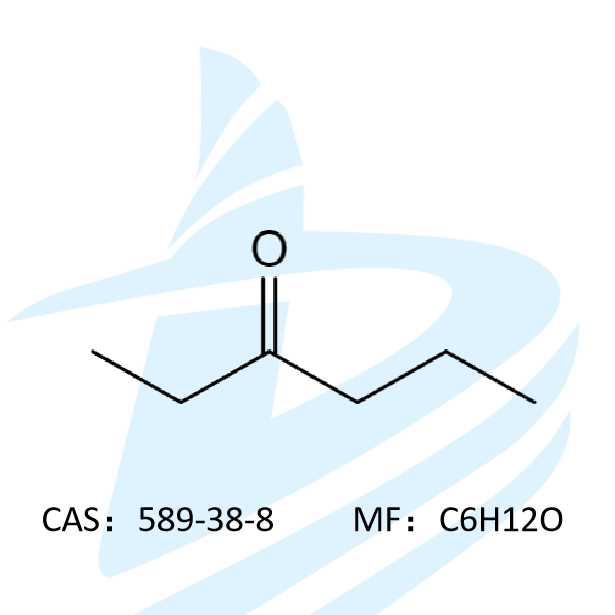
The acyl chloride (C₅H₉OCl) is our first intermediate product. It's more reactive than the carboxylic acid, which makes it useful for further reactions.
Step 2: Formation of a Grignard Reagent
Next, we need to create a Grignard reagent. A Grignard reagent is an organomagnesium compound with the general formula RMgX, where R is an alkyl or aryl group and X is a halogen. For the synthesis of 4 - heptanone, we can use ethylmagnesium bromide (C₂H₅MgBr).
To make the Grignard reagent, we react ethyl bromide (C₂H₅Br) with magnesium metal (Mg) in an ether solvent like diethyl ether (C₄H₁₀O). The reaction is:
C₂H₅Br+ Mg → C₂H₅MgBr
This Grignard reagent is another important intermediate. It has a strong nucleophilic character, which means it can react with electrophiles like the acyl chloride we made earlier.
Step 3: Reaction between the Acyl Chloride and the Grignard Reagent
Now, we react the acyl chloride (C₅H₉OCl) with the Grignard reagent (C₂H₅MgBr). This reaction forms a ketone intermediate. The reaction proceeds as follows:
C₅H₉OCl+ C₂H₅MgBr → C₇H₁₄O+ MgBrCl
The product of this reaction is 4 - heptanone. But during the reaction, there are some side reactions and intermediate species that are formed. For example, an addition complex is formed first when the Grignard reagent attacks the carbonyl carbon of the acyl chloride. This complex then breaks down to form the final product.
Other Possible Intermediate Routes
There are other ways to synthesize 4 - heptanone as well. For instance, we could start with 2 - Heptanone. 2 - heptanone (C₇H₁₄O) is a structural isomer of 4 - heptanone. Through a series of oxidation and reduction reactions, we might be able to convert 2 - heptanone into 4 - heptanone. In this case, the intermediate products would include various oxidation states of the carbon - oxygen bonds in the molecule.
Another possible starting material is 3 - hexanone. By reacting 3 - hexanone with the right reagents, we can extend the carbon chain and form 4 - heptanone. During this process, there will be intermediate products such as enolates. Enolates are formed when a ketone is deprotonated at the alpha - carbon. For example, when 3 - hexanone is treated with a strong base like lithium diisopropylamide (LDA), an enolate is formed:
C₆H₁₂O+ LDA → C₆H₁₁O⁻Li⁺+ (CH₃)₂CHNH₂
This enolate can then react with an alkylating agent to add the necessary carbon atoms to form 4 - heptanone.
Why Intermediate Products Matter
Understanding the intermediate products in the synthesis of 4 - heptanone is crucial for several reasons. First of all, it helps us control the reaction conditions. By knowing what intermediate products are formed, we can adjust the temperature, pressure, and reaction time to optimize the yield of the final product.
Secondly, it allows us to troubleshoot any problems that might occur during the synthesis. If we're not getting the expected yield of 4 - heptanone, we can analyze the intermediate products to see where the reaction might be going wrong. Maybe there's a side reaction that's consuming too much of an intermediate, or perhaps the reaction conditions are not suitable for a particular step.
Quality Control of Intermediate Products
As a supplier of 4 - heptanone, we pay close attention to the quality of the intermediate products. We use various analytical techniques such as gas chromatography - mass spectrometry (GC - MS) to identify and quantify the intermediate products. This helps us ensure that the intermediate products are pure and that the reaction is proceeding as planned.
We also have strict quality control measures in place during the synthesis process. We make sure that the raw materials are of high quality, and we follow good manufacturing practices to ensure the consistency of the intermediate products. This ultimately leads to a high - quality 4 - heptanone product that meets the needs of our customers.
Conclusion
In conclusion, the synthesis of 4 - heptanone involves several intermediate products, depending on the synthesis route. Whether we start with carboxylic acids, other ketones, or use Grignard reagents, each step in the synthesis has its own set of intermediate species. Understanding these intermediate products is essential for efficient and high - quality synthesis.
If you're in the market for 4 - heptanone or have any questions about its synthesis, don't hesitate to reach out. We're here to provide you with the best - quality product and to assist you in any way we can. Let's start a conversation about your requirements and see how we can work together.
References
- Smith, J. G. (2018). Organic Chemistry Laboratory Manual. Publisher: ABC Press.
- Brown, A. L. (2020). Advanced Organic Synthesis: Principles and Applications. Publisher: XYZ Books.