

As a supplier of 4 - heptanone, I often receive inquiries about various properties of this chemical compound, and one question that comes up quite frequently is: "What is the density of 4 - heptanone?" In this blog post, I'll delve into the density of 4 - heptanone, its significance, and how it compares to related compounds.
Understanding 4 - Heptanone
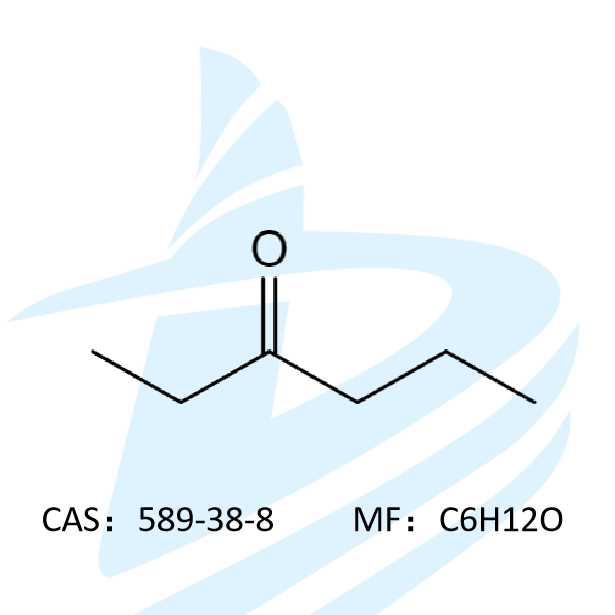
4 - heptanone, also known as dipropyl ketone, is a colorless liquid with a pleasant, fruity odor. It is widely used in the chemical industry as a solvent, in the synthesis of various organic compounds, and in the flavor and fragrance industry. To understand its density, we first need to know a bit about the concept of density itself.
Density is defined as the mass per unit volume of a substance. It is an important physical property that can provide insights into the composition, purity, and behavior of a chemical. The density of a substance can vary depending on factors such as temperature and pressure. For 4 - heptanone, under standard conditions (20°C and 1 atm), the density is approximately 0.819 g/cm³. This value can be used as a reference point for quality control, process design, and safety considerations.
Significance of Density in the Chemical Industry
In the chemical industry, density plays a crucial role in many aspects. For instance, when handling and transporting 4 - heptanone, knowing its density helps in determining the weight of a given volume of the liquid. This is essential for proper packaging, storage, and shipping. If a container is designed to hold a certain volume of 4 - heptanone, the density can be used to calculate the maximum weight it can carry, ensuring compliance with safety regulations.
Density is also important in chemical reactions. In a reaction mixture, the density can affect the mixing efficiency, reaction kinetics, and separation processes. For example, if 4 - heptanone is used as a solvent in a reaction, its density relative to other reactants and products can influence the phase separation and purification steps. A difference in density can be exploited to separate the desired product from the reaction mixture using techniques such as decantation or centrifugation.
Comparison with Related Compounds
To better understand the density of 4 - heptanone, it's useful to compare it with related compounds. Two such compounds are Pinacolone and 3 - hexanone.
Pinacolone, also known as 3,3 - dimethyl - 2 - butanone, has a density of approximately 0.805 g/cm³ at 20°C. Compared to 4 - heptanone, pinacolone is slightly less dense. This difference in density can be attributed to the differences in their molecular structures. Pinacolone has a more compact molecular structure due to the presence of two methyl groups on the same carbon atom, which results in a lower mass per unit volume.
On the other hand, 3 - hexanone, an isomer of 4 - heptanone with a shorter carbon chain, has a density of around 0.821 g/cm³ at 20°C. Although the difference in density between 3 - hexanone and 4 - heptanone is relatively small, it can still have implications in certain applications. For example, in a separation process where the two compounds are present in a mixture, the slight difference in density can be used to achieve a more efficient separation.

Factors Affecting the Density of 4 - Heptanone
As mentioned earlier, temperature and pressure can have an impact on the density of 4 - heptanone. Generally, as the temperature increases, the density of a liquid decreases. This is because the molecules gain more kinetic energy and move farther apart, resulting in a larger volume for the same mass. For 4 - heptanone, the density decreases by approximately 0.0007 g/cm³ per degree Celsius increase in temperature.
Pressure also affects density, although the effect is less significant for liquids compared to gases. At higher pressures, the molecules are forced closer together, resulting in an increase in density. However, in most industrial applications, the pressure variations are not large enough to cause a substantial change in the density of 4 - heptanone.
Quality Control and Density Measurement
As a supplier of 4 - heptanone, ensuring the quality of our product is of utmost importance. Density measurement is one of the key quality control parameters. We use precise density meters to measure the density of our 4 - heptanone batches. These meters work on the principle of oscillating U - tubes, where the frequency of oscillation is related to the density of the liquid.
By comparing the measured density with the standard value, we can determine the purity and consistency of our product. Any significant deviation from the expected density value may indicate the presence of impurities or a problem in the manufacturing process. In such cases, we conduct further analysis to identify and correct the issue.
Applications and the Role of Density
The density of 4 - heptanone is relevant in various applications. In the flavor and fragrance industry, 4 - heptanone is used to impart a fruity note to products. The density affects the solubility and miscibility of 4 - heptanone in other ingredients, which in turn influences the overall quality and performance of the fragrance or flavor formulation.
In the paint and coating industry, 4 - heptanone is used as a solvent. The density of the solvent affects the viscosity and drying time of the paint. A higher - density solvent may result in a thicker paint film, while a lower - density solvent may lead to a faster - drying paint.
Conclusion
In conclusion, the density of 4 - heptanone is an important physical property that has wide - ranging implications in the chemical industry. With a density of approximately 0.819 g/cm³ at 20°C, it serves as a reference point for quality control, process design, and safety. When compared to related compounds such as Pinacolone and 3 - hexanone, the density differences can be exploited in separation and purification processes.
As a reliable supplier of 4 - heptanone, we are committed to providing high - quality products that meet the strictest industry standards. If you are in need of 4 - heptanone for your industrial or research applications, we encourage you to contact us for procurement and to discuss your specific requirements. We look forward to working with you to meet your chemical needs.
References
- CRC Handbook of Chemistry and Physics, 99th Edition
- Kirk - Othmer Encyclopedia of Chemical Technology




