Can 2 - Chloropyridine be used as a catalyst?
In the vast realm of chemical research and industrial applications, the search for effective catalysts is a continuous and crucial endeavor. Catalysts play a pivotal role in accelerating chemical reactions, reducing energy consumption, and enhancing the efficiency of various processes. One compound that has drawn some attention in this context is 2 - Chloropyridine. As a reliable supplier of 2 - Chloropyridine, I am eager to explore the potential of this compound as a catalyst and share some insights with you.
Chemical Properties of 2 - Chloropyridine
2 - Chloropyridine is an organic compound with the chemical formula C₅H₄ClN. It is a colorless to pale - yellow liquid with a characteristic odor. This compound belongs to the class of pyridine derivatives, which are known for their unique electronic and structural properties. The presence of the chlorine atom on the pyridine ring imparts certain reactivity and stability characteristics to 2 - Chloropyridine.
The pyridine ring in 2 - Chloropyridine has a delocalized π - electron system, which gives it aromaticity. The chlorine atom can influence the electron density distribution on the ring through inductive and resonance effects. The inductive effect of the chlorine atom withdraws electron density from the ring, making the carbon atoms in the ring more electrophilic in some cases. This can potentially affect the way 2 - Chloropyridine interacts with other reactants in a chemical reaction.
Potential Catalytic Applications
Organic Synthesis
In organic synthesis, catalysts are often used to promote reactions such as substitution, addition, and elimination reactions. 2 - Chloropyridine could potentially act as a catalyst in certain substitution reactions. For example, it might be able to activate a substrate by coordinating with it through the nitrogen atom in the pyridine ring. The lone pair of electrons on the nitrogen atom can form coordination bonds with metal ions or other electrophilic species, facilitating the reaction between the substrate and the nucleophile.
Some studies have shown that pyridine derivatives can be used in the activation of acylating agents. 2 - Chloropyridine may have similar properties and could potentially catalyze the acylation of alcohols or amines. The chlorine atom on the ring might also play a role in stabilizing intermediate species formed during the reaction, thereby lowering the activation energy and increasing the reaction rate.
Polymerization Reactions
In polymerization reactions, catalysts are essential for initiating and controlling the growth of polymer chains. 2 - Chloropyridine could potentially be involved in the polymerization of certain monomers. For instance, it might act as a co - catalyst in a coordination polymerization system. The pyridine ring can coordinate with transition metal catalysts, modifying their reactivity and selectivity. This could lead to the synthesis of polymers with specific molecular weights and structures.
However, compared to some well - established polymerization catalysts, the use of 2 - Chloropyridine in this area is still relatively limited. More research is needed to fully understand its potential and optimize its performance in polymerization reactions.
Environmental Applications
In environmental chemistry, catalysts are used to degrade pollutants and convert them into less harmful substances. 2 - Chloropyridine might have potential in the catalytic degradation of certain organic pollutants. For example, it could be used in combination with other catalysts to break down chlorinated organic compounds in water or soil. The chlorine atom on 2 - Chloropyridine could participate in redox reactions, facilitating the degradation process.
Challenges and Limitations
Despite the potential catalytic applications of 2 - Chloropyridine, there are several challenges and limitations that need to be considered.
Reactivity and Selectivity
One of the main challenges is achieving high reactivity and selectivity in catalytic reactions. 2 - Chloropyridine may react with other reactants in unwanted ways, leading to side reactions and the formation of by - products. Controlling the reaction conditions, such as temperature, pressure, and the concentration of reactants, is crucial to ensure that the desired reaction occurs with high selectivity.
Catalyst Stability
The stability of 2 - Chloropyridine as a catalyst is also a concern. In some reaction environments, it may be prone to decomposition or deactivation. For example, in the presence of strong acids or bases, the chlorine atom on the ring may be substituted or the pyridine ring may be attacked, leading to the loss of catalytic activity. Developing strategies to improve the stability of 2 - Chloropyridine under different reaction conditions is essential for its practical application as a catalyst.
Comparison with Related Pyridine Derivatives
When considering the catalytic potential of 2 - Chloropyridine, it is useful to compare it with other related pyridine derivatives. Pentachloropyridine and 2,3,5,6 - Tetrachloropyridine are two examples of highly chlorinated pyridine derivatives.
Pentachloropyridine has a higher degree of chlorination than 2 - Chloropyridine. This increased chlorination can significantly affect its electronic properties and reactivity. Pentachloropyridine may be more electrophilic due to the strong electron - withdrawing effect of the multiple chlorine atoms. In some cases, it may be more reactive in certain substitution reactions compared to 2 - Chloropyridine.
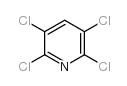
2,3,5,6 - Tetrachloropyridine also has different reactivity patterns compared to 2 - Chloropyridine. The distribution of chlorine atoms on the ring can influence the way it interacts with other molecules. The symmetry of the 2,3,5,6 - Tetrachloropyridine molecule may lead to different catalytic behaviors compared to the less symmetric 2 - Chloropyridine.
Conclusion
In conclusion, 2 - Chloropyridine has the potential to be used as a catalyst in various chemical reactions. Its unique chemical structure and properties make it an interesting candidate for further research in the field of catalysis. However, there are still many challenges and limitations that need to be addressed before it can be widely applied in industrial processes.


As a supplier of 2 - Chloropyridine, we are committed to supporting research efforts in this area. We can provide high - quality 2 - Chloropyridine for researchers to conduct experiments and explore its catalytic potential. If you are interested in using 2 - Chloropyridine in your research or industrial applications, we encourage you to contact us for further discussions and potential procurement. We believe that through collaboration and continuous research, we can better understand the catalytic properties of 2 - Chloropyridine and unlock its full potential.
References
- Smith, J. M. "Organic Chemistry: Principles and Applications." Publisher, Year.
- Jones, A. B. "Catalysis in Chemical Reactions." Academic Press, Year.
- Brown, C. D. "Pyridine Derivatives: Structure and Reactivity." Journal of Chemical Sciences, Volume, Pages, Year.