Hey there! As a 2 - Pentanone supplier, I often get asked a bunch of questions about this chemical. One question that pops up quite a bit is, "Can 2 - Pentanone participate in condensation reactions?" Well, let's dig into this topic and find out.
First off, let's quickly go over what 2 - Pentanone is. It's a simple ketone with the molecular formula C₅H₁₀O. It's a colorless liquid with a characteristic odor, and it's used in a variety of industries, like in the production of solvents, flavors, and fragrances.
Now, onto condensation reactions. A condensation reaction is a type of chemical reaction where two molecules combine to form a larger molecule, usually with the loss of a small molecule like water. There are different types of condensation reactions, but the most common ones involving ketones are aldol condensations.
Aldol Condensation and 2 - Pentanone
In an aldol condensation, an enolate ion (formed from a carbonyl compound) reacts with another carbonyl compound. For 2 - Pentanone, it can form an enolate ion in the presence of a base. The alpha - hydrogens (the hydrogens on the carbon next to the carbonyl group) are acidic enough to be removed by a base, creating an enolate.
Let's say we have 2 - Pentanone in a basic solution. The base (like sodium hydroxide or potassium hydroxide) can abstract one of the alpha - hydrogens, forming an enolate ion. This enolate can then react with another molecule of 2 - Pentanone. The enolate attacks the carbonyl carbon of the other 2 - Pentanone molecule, and after a series of steps, including protonation and dehydration, we get an aldol condensation product.
The general reaction can be written like this:
2 C₅H₁₀O + base → C₁₀H₁₈O + H₂O
The product of the aldol condensation of 2 - Pentanone is a beta - hydroxy ketone initially, which can further undergo dehydration to form an alpha, beta - unsaturated ketone.
Factors Affecting the Condensation Reaction
There are a few factors that can affect whether 2 - Pentanone will participate in a condensation reaction and how well it will go.

Base Strength: A stronger base will more readily abstract the alpha - hydrogens to form the enolate. But if the base is too strong, it can cause side reactions or over - deprotonation. For example, using a very strong base might lead to the formation of multiple enolate ions on the same molecule, which can complicate the reaction.
Concentration: The concentration of 2 - Pentanone and the base matters. Higher concentrations generally increase the likelihood of the enolate reacting with another carbonyl molecule. However, if the concentration is too high, it can also lead to unwanted side reactions or the formation of polymers.
Temperature: Temperature plays a role too. Higher temperatures can speed up the reaction, but they can also cause the dehydration step to occur more rapidly. This might lead to the formation of the alpha, beta - unsaturated ketone directly, skipping the beta - hydroxy ketone intermediate.
Comparing with Other Ketones
It's interesting to compare 2 - Pentanone with other ketones in terms of their ability to participate in condensation reactions. For example, 2 - Heptanone has a longer carbon chain. It also has alpha - hydrogens and can form an enolate in a similar way to 2 - Pentanone. However, the longer chain might affect the reactivity due to steric hindrance. The larger groups around the carbonyl and alpha - carbons can make it a bit more difficult for the enolate to approach another carbonyl molecule.
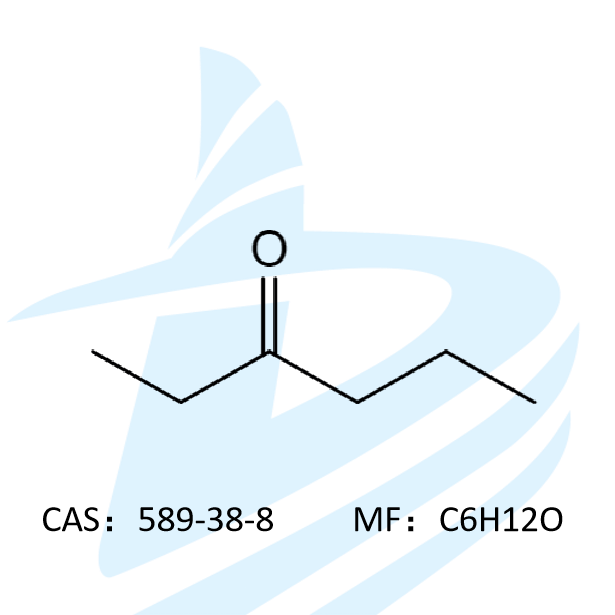
3 - Hexanone is another ketone. It has a different structure, with the carbonyl group in the middle of the chain. This can change the acidity of the alpha - hydrogens and the reactivity of the enolate. The position of the carbonyl group can also affect the stability of the intermediate products formed during the condensation reaction.
Pinacolone has a unique structure with a tert - butyl group. This group provides significant steric hindrance, which can make it more difficult for the enolate to react with another carbonyl molecule compared to 2 - Pentanone.
Applications of 2 - Pentanone Condensation Products
The products of the condensation reactions of 2 - Pentanone have some useful applications. The alpha, beta - unsaturated ketones formed can be used in the synthesis of pharmaceuticals. They can act as intermediates in the production of drugs, especially those that require a specific carbon - carbon double bond and a carbonyl group in the molecule.
These condensation products can also be used in the production of specialty chemicals. For example, they can be used as starting materials for the synthesis of new flavors and fragrances. The unique structures of the condensation products can give rise to new and interesting scents and tastes.
Conclusion
So, to answer the question, yes, 2 - Pentanone can participate in condensation reactions, specifically aldol condensations. It can form enolate ions in the presence of a base, which can react with other carbonyl molecules to form larger molecules. However, the reaction is affected by factors like base strength, concentration, and temperature.
If you're in the market for high - quality 2 - Pentanone for your condensation reactions or other applications, I'd love to talk to you. Whether you're working on research projects, industrial production, or anything in between, we've got the 2 - Pentanone you need. Reach out to start a conversation about your specific requirements and how we can help you achieve your goals.
References
- Carey, F. A., & Sundberg, R. J. (2007). Advanced Organic Chemistry: Part A: Structure and Mechanisms. Springer.
- McMurry, J. (2012). Organic Chemistry. Brooks/Cole.