As a reliable supplier of 2-(4-Chlorobenzyl), I often receive inquiries from customers regarding its chemical reactivity, especially its reaction with acids. In this blog post, I will delve into the scientific aspects of whether 2-(4-Chlorobenzyl) reacts with acids, providing a comprehensive analysis based on chemical principles and experimental evidence.
Chemical Structure and Properties of 2-(4-Chlorobenzyl)
Before discussing its reactivity with acids, let's first understand the chemical structure and properties of 2-(4-Chlorobenzyl). The compound has a benzyl group with a chlorine atom attached to the para - position of the benzene ring. The presence of the chlorine atom can influence the electron density of the benzene ring through inductive and resonance effects. The benzyl group is relatively stable due to the delocalization of electrons in the benzene ring, but it also has certain reactive sites.
The reactivity of 2-(4-Chlorobenzyl) is mainly determined by the nature of its functional groups and the electronic environment around them. The chlorine atom is an electron - withdrawing group, which can make the benzene ring less electron - rich compared to a simple benzene ring. This affects the way it interacts with other chemical species, including acids.
General Reactivity of Organic Compounds with Acids
In organic chemistry, the reaction of an organic compound with an acid can occur through various mechanisms. For example, a compound with a basic functional group such as an amine or an alcohol can react with an acid through protonation. The basic site in the molecule accepts a proton from the acid, forming a conjugate acid.


Another common reaction mechanism is the electrophilic aromatic substitution reaction. In this reaction, an electrophile generated from the acid attacks the electron - rich benzene ring of an aromatic compound. However, as mentioned earlier, the presence of the electron - withdrawing chlorine atom in 2-(4-Chlorobenzyl) makes the benzene ring less susceptible to electrophilic attack compared to an unsubstituted benzene ring.
Does 2-(4-Chlorobenzyl) React with Acids?
-
Protonation Reactions
- 2-(4-Chlorobenzyl) does not have a strongly basic functional group that can readily accept a proton from an acid. The carbon atoms in the benzyl group and the benzene ring are not basic enough to form stable conjugate acids upon protonation. For example, if we consider a strong acid like hydrochloric acid (HCl), there is no obvious site in 2-(4-Chlorobenzyl) where a proton can be easily added to form a stable product. The chlorine atom on the benzene ring is not likely to be protonated either, as the bond between chlorine and carbon is relatively strong and chlorine is electronegative.
-
Electrophilic Aromatic Substitution
- In the case of electrophilic aromatic substitution reactions, the electron - withdrawing chlorine atom deactivates the benzene ring towards electrophiles. For example, when reacting with a Lewis acid - catalyzed electrophilic substitution system (such as using a mixture of a strong acid and a Lewis acid like AlCl₃), the reaction rate will be much slower compared to an unsubstituted benzene.
- The electrophile generated from the acid - Lewis acid system will have a lower probability of attacking the benzene ring of 2-(4-Chlorobenzyl). The chlorine atom withdraws electron density from the benzene ring, making it less nucleophilic. As a result, under normal conditions, 2-(4-Chlorobenzyl) shows relatively low reactivity in electrophilic aromatic substitution reactions with common acids and acid - catalyst systems.
-
Exceptions and Special Conditions
- However, under extremely harsh conditions, such as high temperatures and the presence of very strong acids or highly reactive electrophiles, some reactions may occur. For example, in the presence of a superacid like fluorosulfuric acid (HSO₃F), which is a very strong proton - donating agent, it may be possible to induce some proton - related reactions or even initiate a very slow electrophilic substitution reaction on the benzene ring. But these are not typical reaction conditions and are more of a theoretical possibility rather than a common occurrence.
Comparison with Other Related Compounds
To better understand the reactivity of 2-(4-Chlorobenzyl) with acids, let's compare it with some related compounds.
- 4,4'-Oxydiphenol 1965 - 09 - 9
- 4,4'-Oxydiphenol 1965 - 09 - 9 has hydroxyl groups on the benzene rings. These hydroxyl groups are basic enough to react with acids through protonation. When reacting with an acid, the oxygen atom in the hydroxyl group can accept a proton, forming a conjugate acid. In contrast, 2-(4-Chlorobenzyl) lacks such basic functional groups, so its reactivity with acids is different.
- Methyl Dichloroacetate 116 - 54 - 1
- Methyl Dichloroacetate 116 - 54 - 1 has an ester group and two chlorine atoms on the alpha - carbon. The ester group can undergo hydrolysis in the presence of an acid catalyst. The acid provides a proton to activate the carbonyl group of the ester, facilitating the nucleophilic attack of water molecules and leading to the hydrolysis of the ester. 2-(4-Chlorobenzyl) does not have an ester group, so it does not undergo this type of acid - catalyzed hydrolysis reaction.
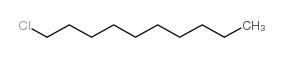
- 1 - Chlorodecane 1002 - 69 - 3
- 1 - Chlorodecane 1002 - 69 - 3 is an alkyl chloride. It can react with some strong nucleophiles in the presence of an acid or under acidic conditions through a substitution reaction. The chlorine atom can be replaced by a nucleophile. However, 2-(4-Chlorobenzyl) has a different structure with a benzene ring, and its reactivity is mainly related to the aromatic ring rather than the simple alkyl - chloride - like substitution reactions of 1 - Chlorodecane.
Applications and Significance of Understanding Reactivity
Understanding whether 2-(4-Chlorobenzyl) reacts with acids is crucial for its applications in various industries. For example, in the pharmaceutical industry, if 2-(4-Chlorobenzyl) is used as an intermediate in the synthesis of a drug, knowing its reactivity with acids can help chemists design appropriate reaction conditions and avoid unwanted side reactions.
In the chemical manufacturing process, if 2-(4-Chlorobenzyl) is stored or transported in an environment where acids may be present, understanding its non - reactivity or low reactivity with acids can ensure the stability of the compound and the safety of the process.
Conclusion and Call to Action
In conclusion, under normal conditions, 2-(4-Chlorobenzyl) has relatively low reactivity with acids. It does not have a strongly basic functional group for protonation and the electron - withdrawing chlorine atom on the benzene ring deactivates it towards electrophilic aromatic substitution reactions.
If you are in need of high - quality 2-(4-Chlorobenzyl) for your research or industrial applications, we are here to provide you with reliable products. We can offer detailed technical support and guidance based on your specific requirements. Please feel free to contact us for procurement and further discussions.
References
- March, J. (1992). Advanced Organic Chemistry: Reactions, Mechanisms, and Structure. John Wiley & Sons.
- Carey, F. A., & Sundberg, R. J. (2007). Advanced Organic Chemistry Part A: Structure and Mechanisms. Springer.