Hey there! As a supplier of 2 - Pentanone, I've been getting a lot of questions about how this chemical interacts with biological molecules. So, I thought I'd write this blog to shed some light on the topic.
First off, let's talk a bit about 2 - Pentanone itself. It's a colorless liquid with a pleasant, fruity odor. It's used in a variety of industries, from perfumery to the manufacturing of pharmaceuticals. But what happens when it comes into contact with biological molecules?
Interaction with Proteins
Proteins are the workhorses of our cells, performing a wide range of functions. When 2 - Pentanone interacts with proteins, it can do so in a few different ways.
One way is through non - covalent interactions. 2 - Pentanone has a carbonyl group (C = O), which is a polar functional group. This polar group can form hydrogen bonds with the amino acid residues in proteins. For example, it might interact with the side chains of serine, threonine, or asparagine, which have hydroxyl or amide groups that can act as hydrogen - bond acceptors or donors.
These non - covalent interactions can affect the protein's structure. If the interactions are strong enough, they can cause the protein to change its conformation. A change in conformation can, in turn, affect the protein's function. For instance, if a protein is an enzyme, a change in its structure might alter its active site, making it less efficient at catalyzing a reaction.
Another way 2 - Pentanone can interact with proteins is through covalent bonding, although this is less common. In some cases, the carbonyl group of 2 - Pentanone can react with certain amino acid residues, such as lysine. This reaction can form a Schiff base, which is a covalent bond between the carbonyl carbon of 2 - Pentanone and the amino group of lysine. This covalent modification can have a more profound and long - lasting effect on the protein's function compared to non - covalent interactions.
Interaction with Lipids
Lipids are an essential part of our cell membranes. They form a bilayer structure that separates the inside of the cell from the outside environment. 2 - Pentanone can interact with lipids in the cell membrane.
Since 2 - Pentanone is a relatively small and hydrophobic molecule (despite having a polar carbonyl group), it can dissolve in the lipid bilayer. Once it's in the lipid bilayer, it can disrupt the normal packing of the lipid molecules. This disruption can change the fluidity of the membrane.
If the fluidity of the cell membrane changes, it can affect the function of membrane - bound proteins. Many membrane - bound proteins, such as ion channels and receptors, rely on the proper fluidity of the membrane to function correctly. For example, an ion channel might not be able to open or close properly if the membrane fluidity is altered by the presence of 2 - Pentanone.
Moreover, 2 - Pentanone can also interact with lipid - soluble signaling molecules. Some signaling molecules, like certain hormones, are lipid - soluble and can diffuse through the cell membrane. 2 - Pentanone might compete with these signaling molecules for binding sites on receptors or interfere with their diffusion through the membrane, thus affecting the cell's signaling pathways.
Interaction with Nucleic Acids
Nucleic acids, such as DNA and RNA, are responsible for storing and transmitting genetic information. 2 - Pentanone can interact with nucleic acids in several ways.
Similar to its interaction with proteins, 2 - Pentanone can form non - covalent interactions with nucleic acids. The polar carbonyl group can form hydrogen bonds with the nitrogenous bases in DNA and RNA. For example, it can interact with the adenine - thymine or guanine - cytosine base pairs through hydrogen - bonding interactions.
These non - covalent interactions can affect the stability of the DNA double helix or the secondary structure of RNA. If the stability of the nucleic acid structure is altered, it can have implications for processes like DNA replication, transcription, and translation. For instance, during DNA replication, a change in the DNA structure might cause errors in the copying process, leading to mutations.

In some cases, 2 - Pentanone might also react covalently with nucleic acids. Although this is a rare event, the reactive carbonyl group could potentially react with the sugar - phosphate backbone or the nitrogenous bases, leading to chemical modifications of the nucleic acids. These covalent modifications can be more difficult for the cell to repair and can have long - term consequences for the cell's function and viability.
Comparison with Similar Compounds
It's interesting to compare 2 - Pentanone with other similar ketones in terms of their interaction with biological molecules. For example, 2 - Heptanone is a larger ketone with a longer carbon chain. Due to its larger size, it might have a different ability to penetrate cell membranes compared to 2 - Pentanone. It could also have different binding affinities for proteins and nucleic acids because of its different shape and electronic properties.
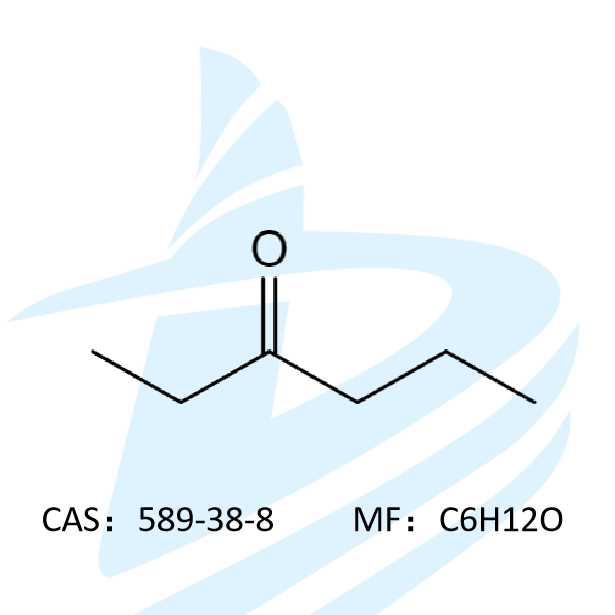
3 - Hexanone is another ketone with a different structure. The position of the carbonyl group in 3 - hexanone is different from that in 2 - Pentanone. This difference in structure can lead to different patterns of interaction with biological molecules. For example, the carbonyl group in 3 - hexanone might be more or less accessible for hydrogen - bonding with proteins or nucleic acids depending on its position in the molecule.
Pinacolone has a unique structure with a quaternary carbon atom adjacent to the carbonyl group. This structural feature can affect its reactivity and its interaction with biological molecules. It might have different solubility properties in lipid bilayers compared to 2 - Pentanone, which can, in turn, influence its ability to disrupt cell membranes.
Implications in Biology and Industry
The interaction of 2 - Pentanone with biological molecules has both biological and industrial implications.
In biology, understanding these interactions can help us understand the toxicity of 2 - Pentanone. If 2 - Pentanone can disrupt important biological processes by interacting with proteins, lipids, or nucleic acids, it can be harmful to living organisms. This knowledge can be used to develop safety guidelines for handling 2 - Pentanone and to assess its environmental impact.
In industry, this understanding can be used to optimize the use of 2 - Pentanone. For example, in the pharmaceutical industry, if we know how 2 - Pentanone interacts with biological molecules, we can use it more effectively in drug synthesis. It might be used as a solvent or a reagent in a reaction, and understanding its interaction with biological molecules can help us ensure that it doesn't have unwanted side effects on the biological systems that the drugs are intended to target.
Conclusion
So, as you can see, 2 - Pentanone can interact with biological molecules in a variety of ways. From non - covalent and covalent interactions with proteins to disrupting lipid bilayers and affecting nucleic acid structure, these interactions can have significant impacts on biological processes.
If you're in an industry that uses 2 - Pentanone or is interested in learning more about it, I'd love to have a chat with you. Whether you need a reliable supply of high - quality 2 - Pentanone or have questions about its properties and applications, don't hesitate to reach out for a procurement discussion.
References
- Nelson, D. L., & Cox, M. M. (2008). Lehninger Principles of Biochemistry. W. H. Freeman.
- Stryer, L., Berg, J. M., & Tymoczko, J. L. (2007). Biochemistry. W. H. Freeman.