Hey there! As a supplier of Pentachloropyridine, I've spent a ton of time diving into the nitty - gritty details of this chemical. One of the most fascinating aspects is how its structure affects its chemical reactivity. So, let's take a deep dive into this topic.
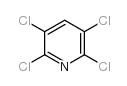
First off, let's talk about what Pentachloropyridine is. You can check out more details about it Pentachloropyridine. It's a heterocyclic organic compound with a pyridine ring where five hydrogen atoms are replaced by chlorine atoms. The pyridine ring is a six - membered aromatic ring with one nitrogen atom. This structure gives Pentachloropyridine some unique properties.
The presence of five chlorine atoms on the pyridine ring has a huge impact on its reactivity. Chlorine is an electronegative element. When it's attached to the carbon atoms in the pyridine ring, it pulls electron density towards itself through the inductive effect. This makes the carbon atoms in the ring electron - deficient. As a result, Pentachloropyridine is more prone to nucleophilic substitution reactions.
Nucleophiles are species that have a lone pair of electrons and are attracted to electron - deficient centers. In the case of Pentachloropyridine, the electron - deficient carbon atoms in the ring are like magnets for nucleophiles. For example, when a strong nucleophile like an alkoxide ion (RO⁻) approaches Pentachloropyridine, it can attack one of the carbon atoms bonded to a chlorine atom. The chlorine atom is then displaced, and a new carbon - oxygen bond is formed. This is a classic example of a nucleophilic substitution reaction.
Another interesting aspect is the resonance effect. The nitrogen atom in the pyridine ring has a lone pair of electrons, but these electrons are not part of the aromatic π - electron system. However, the electronegativity of nitrogen also influences the electron distribution in the ring. The combination of the inductive effect of the chlorine atoms and the resonance effect of the nitrogen atom creates a complex electronic environment in the molecule.
This electronic environment affects the regioselectivity of the nucleophilic substitution reactions. Regioselectivity refers to the preference for a reaction to occur at a particular position in the molecule. In Pentachloropyridine, the position of the substitution can be predicted based on the relative electron - deficiency of the carbon atoms. Generally, the carbon atoms at the ortho and para positions to the nitrogen atom are more electron - deficient compared to the meta position. So, nucleophilic substitution reactions are more likely to occur at the ortho and para positions.
Now, let's compare Pentachloropyridine with 2,3,5,6 - Tetrachloropyridine. The main difference between them is the number of chlorine atoms. Since Pentachloropyridine has one more chlorine atom, it is more electron - deficient overall. This means that Pentachloropyridine is more reactive towards nucleophiles compared to 2,3,5,6 - Tetrachloropyridine. The additional chlorine atom further enhances the inductive effect, making the carbon atoms in the ring even more attractive to nucleophiles.
The structure of Pentachloropyridine also affects its stability. The aromaticity of the pyridine ring provides some stability to the molecule. However, the presence of five chlorine atoms introduces some strain. Chlorine atoms are relatively large, and having five of them in a relatively small ring can cause steric hindrance. This steric hindrance can influence the reaction rates and the products formed. For example, in some reactions, the steric hindrance may prevent a nucleophile from approaching a particular carbon atom, leading to different reaction pathways.
In addition to nucleophilic substitution reactions, Pentachloropyridine can also undergo reduction reactions. Reducing agents can remove some of the chlorine atoms from the ring. The ease of reduction depends on the position of the chlorine atoms and the electronic environment around them. The more electron - deficient carbon atoms bonded to chlorine are more likely to be reduced first.
The reactivity of Pentachloropyridine also has implications for its use in various industries. It is widely used in the synthesis of pharmaceuticals, agrochemicals, and dyes. In the pharmaceutical industry, its ability to undergo nucleophilic substitution reactions allows chemists to introduce different functional groups into the molecule, creating new compounds with potential therapeutic properties. In the agrochemical industry, the reactivity of Pentachloropyridine can be harnessed to develop new pesticides and herbicides.
As a supplier of Pentachloropyridine, I understand the importance of providing high - quality products. The reactivity of Pentachloropyridine is a key factor that our customers consider when using it in their research and production processes. We ensure that our Pentachloropyridine meets the highest standards of purity, which is crucial for consistent and reliable reactivity.
If you're involved in the fields of pharmaceuticals, agrochemicals, or any other industry that requires the use of Pentachloropyridine, I encourage you to get in touch for procurement discussions. Whether you're conducting research on new chemical reactions or looking to scale up your production, our team is here to support you. We can provide you with detailed information about the product, its reactivity, and how it can fit into your specific needs.
In conclusion, the structure of Pentachloropyridine, with its five chlorine - substituted pyridine ring, has a profound impact on its chemical reactivity. The inductive effect of the chlorine atoms, the resonance effect of the nitrogen atom, and the steric hindrance all play important roles in determining how it reacts with other chemicals. Understanding these relationships is essential for anyone working with this compound. So, if you're interested in exploring the potential of Pentachloropyridine further, don't hesitate to reach out.


References
- March, J. (1992). Advanced Organic Chemistry: Reactions, Mechanisms, and Structure. John Wiley & Sons.
- Smith, M. B., & March, J. (2007). March's Advanced Organic Chemistry: Reactions, Mechanisms, and Structure. John Wiley & Sons.