Hey there! As a supplier of Pentachloropyridine, I'm super stoked to share with you how to prepare coordination compounds of this cool chemical. Pentachloropyridine is a key player in the world of pyridine derivatives, and its coordination compounds have some really nifty applications in various industries. So, let's dive right in!
Understanding Pentachloropyridine
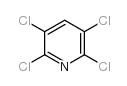
First off, let's talk a bit about Pentachloropyridine. It's a highly chlorinated pyridine compound with a molecular formula of C₅Cl₅N. This chemical is renowned for its stability and reactivity, which makes it a great starting material for synthesizing coordination compounds.
Pentachloropyridine's structure consists of a pyridine ring with five chlorine atoms attached to it. These chlorine atoms not only enhance the molecule's stability but also provide reactive sites for coordination with metal ions. The nitrogen atom in the pyridine ring also plays a crucial role in coordination, as it can donate a pair of electrons to form a coordinate covalent bond with a metal center.
Why Prepare Coordination Compounds of Pentachloropyridine?
Coordination compounds of pentachloropyridine have a wide range of applications. They can be used as catalysts in organic synthesis, as they can activate certain chemical reactions and increase reaction rates. These compounds also have potential applications in materials science, such as in the development of new electronic materials or sensors.
In addition, the unique properties of pentachloropyridine coordination compounds make them interesting for research in the field of bioinorganic chemistry. They might have antibacterial or antifungal properties, which could lead to the development of new drugs.


The Preparation Process
Step 1: Selecting the Metal Ion
The first step in preparing coordination compounds of pentachloropyridine is to choose the right metal ion. Common metal ions used in coordination chemistry include transition metals like copper (Cu), iron (Fe), nickel (Ni), and cobalt (Co). The choice of metal ion depends on the desired properties of the final coordination compound.
For example, if you want a compound with good catalytic activity, you might choose a metal ion with variable oxidation states, such as iron or copper. These metal ions can easily change their oxidation states during a chemical reaction, which is beneficial for catalytic processes.
Step 2: Preparing the Reaction Medium
Once you've selected the metal ion, you need to prepare the reaction medium. Usually, an appropriate solvent is chosen to dissolve both the pentachloropyridine and the metal salt. Common solvents include organic solvents like acetonitrile, dichloromethane, or ethanol.
The solvent should be able to dissolve the reactants well and also be inert under the reaction conditions. It's important to ensure that the reaction medium is free from impurities, as they could interfere with the coordination process.
Step 3: Mixing the Reactants
After preparing the reaction medium, you can start mixing the pentachloropyridine and the metal salt. The molar ratio of pentachloropyridine to the metal salt is crucial and needs to be carefully controlled. In most cases, a stoichiometric ratio is used, but in some situations, an excess of one reactant might be required to drive the reaction to completion.
The mixing process should be carried out under controlled conditions, such as at a specific temperature and with gentle stirring. This helps to ensure that the reactants are evenly distributed in the solution and that the coordination reaction occurs smoothly.
Step 4: Heating and Stirring
Once the reactants are mixed, the reaction mixture is usually heated to a certain temperature to promote the coordination reaction. The heating temperature and time depend on the nature of the metal ion and the reactants. For some metal ions, the reaction might occur at room temperature, while for others, heating to a higher temperature (e.g., 50 - 100°C) might be necessary.
During the heating process, continuous stirring is important to ensure good contact between the reactants and to prevent the formation of local concentration gradients. This helps to obtain a homogeneous coordination compound.
Step 5: Isolation and Purification
After the reaction is complete, the coordination compound needs to be isolated from the reaction mixture. This can be done by various methods, such as filtration, precipitation, or evaporation.
Once the compound is isolated, it usually needs to be purified to remove any unreacted starting materials or by - products. Purification methods can include recrystallization, column chromatography, or washing with appropriate solvents.
Factors Affecting the Preparation
There are several factors that can affect the preparation of coordination compounds of pentachloropyridine.
pH of the Reaction Medium
The pH of the reaction medium can have a significant impact on the coordination reaction. Some metal ions are more stable in acidic conditions, while others prefer basic conditions. For example, iron(III) ions are more stable in acidic solutions, and adjusting the pH to an appropriate value can help to ensure the formation of the desired coordination compound.
Temperature
As mentioned earlier, temperature plays a crucial role in the reaction rate. Higher temperatures generally increase the reaction rate, but they can also cause side reactions or decomposition of the reactants or products. So, it's important to find the optimal temperature for each specific reaction.
Solvent
The choice of solvent can affect the solubility of the reactants and the stability of the coordination compound. Different solvents have different polarities and dielectric constants, which can influence the coordination process. For example, a more polar solvent might favor the dissociation of the metal salt and promote the coordination reaction.
Using 2,3,5,6 - Tetrachloropyridine as an Intermediate
In some cases, 2,3,5,6 - Tetrachloropyridine can be used as an intermediate in the preparation of pentachloropyridine coordination compounds. You can first convert 2,3,5,6 - tetrachloropyridine to pentachloropyridine through a chlorination reaction. Then, use the obtained pentachloropyridine to prepare the coordination compound as described above.
Conclusion
Preparing coordination compounds of pentachloropyridine is an exciting and challenging process. By carefully selecting the metal ion, controlling the reaction conditions, and purifying the final product, you can obtain high - quality coordination compounds with unique properties.
If you're interested in purchasing pentachloropyridine for your research or industrial applications, feel free to reach out to us. We're here to provide you with high - quality pentachloropyridine and any technical support you might need. Let's start a great cooperation and explore the amazing world of pentachloropyridine together!
References
- Cotton, F. A.; Wilkinson, G.; Murillo, C. A.; Bochmann, M. (1999). Advanced Inorganic Chemistry (6th ed.). Wiley.
- Housecroft, C. E.; Sharpe, A. G. (2012). Inorganic Chemistry (4th ed.). Pearson.
- Huheey, J. E.; Keiter, E. A.; Keiter, R. L. (1993). Inorganic Chemistry: Principles of Structure and Reactivity (4th ed.). HarperCollins.