Hey there! I'm a supplier of N,N - Dimethylaniline, and I know that getting rid of impurities from this chemical can be a real headache. In this blog, I'm gonna share some practical ways to remove those pesky impurities from N,N - Dimethylaniline.
First off, let's understand why we need to remove impurities. Impurities in N,N - Dimethylaniline can affect its quality and performance in various applications. Whether it's used in the production of dyes, pharmaceuticals, or other chemicals, pure N,N - Dimethylaniline is crucial for achieving the desired results.
Distillation
One of the most common methods for removing impurities from N,N - Dimethylaniline is distillation. Distillation works based on the different boiling points of substances. N,N - Dimethylaniline has a specific boiling point, and by heating the mixture, we can separate it from impurities with different boiling points.
Here's how it generally goes. You put the impure N,N - Dimethylaniline in a distillation flask. As you heat it, the component with the lower boiling point will vaporize first. The vapor then travels up a condenser, where it cools down and turns back into a liquid. This liquid is collected in a separate container. By carefully controlling the temperature and the distillation process, you can get a relatively pure form of N,N - Dimethylaniline.
However, distillation might not be perfect. Some impurities might have boiling points close to that of N,N - Dimethylaniline, making it a bit tricky to separate them completely. In such cases, we might need to use other methods in combination with distillation.
Extraction
Extraction is another useful technique. It involves using a solvent to dissolve the impurities while leaving the N,N - Dimethylaniline behind. You choose a solvent that has a high affinity for the impurities but doesn't dissolve the N,N - Dimethylaniline easily.
For example, you can mix the impure N,N - Dimethylaniline with the chosen solvent in a separatory funnel. After shaking it well and letting it settle, two layers will form. The layer containing the solvent and the dissolved impurities can be separated from the layer with N,N - Dimethylaniline. This process can be repeated a few times to increase the purity.
But keep in mind that choosing the right solvent is crucial. If the solvent isn't selective enough, it might dissolve some of the N,N - Dimethylaniline along with the impurities, leading to a loss of product.
Adsorption
Adsorption is a method where we use an adsorbent material to attract and hold the impurities. Materials like activated carbon are commonly used as adsorbents. When the impure N,N - Dimethylaniline comes in contact with the activated carbon, the impurities get stuck to the surface of the carbon.


You can simply pass the impure N,N - Dimethylaniline through a column filled with activated carbon. As it flows through, the impurities are adsorbed, and the relatively pure N,N - Dimethylaniline comes out the other end. The advantage of adsorption is that it can remove a wide range of impurities, including those that are difficult to separate by distillation or extraction.
However, the adsorbent has a limited capacity. Once it's saturated with impurities, it needs to be replaced or regenerated.
Chemical Treatment
Sometimes, we can use chemical reactions to convert the impurities into substances that are easier to separate. For example, if there are acidic or basic impurities in the N,N - Dimethylaniline, we can add a suitable reagent to react with them.
If there are acidic impurities, adding a base can neutralize them. The resulting salt can then be separated from the N,N - Dimethylaniline by methods like extraction or filtration. Similarly, for basic impurities, an acid can be used.
But chemical treatment needs to be carefully controlled. Using the wrong reagent or the wrong amount can lead to side reactions that might introduce new impurities or damage the N,N - Dimethylaniline.
Combining Methods
In many cases, using just one method might not be enough to get highly pure N,N - Dimethylaniline. That's why we often combine different methods. For example, we can start with distillation to remove the major impurities with different boiling points. Then, we can use extraction to get rid of any remaining impurities that are soluble in a particular solvent. Finally, adsorption can be used to polish the product and remove any trace impurities.
Now, if you're in the market for high - quality N,N - Dimethylaniline, I'm here to help. I've been in the business for a while, and I know how to ensure the purity of our products. Whether you need it for small - scale research or large - scale industrial production, I can provide you with the right quantity at a competitive price.
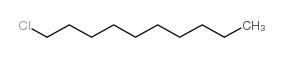
If you're also interested in other related chemicals, check out these links: Methyl Dichloroacetate 116 - 54 - 1, 1 - Chlorodecane 1002 - 69 - 3, and 4,4'-Oxydiphenol 1965 - 09 - 9.
If you have any questions or want to discuss a potential purchase, don't hesitate to reach out. I'm always happy to talk about N,N - Dimethylaniline and how it can meet your needs. Let's have a chat and see how we can work together!
References
- Smith, J. (2018). Chemical Separation Techniques. New York: Chemical Press.
- Johnson, A. (2020). Purification of Organic Compounds. London: Organic Science Publishers.