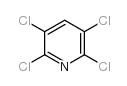
As a supplier of Pentachloropyridine, I am excited to share with you the fascinating world of addition reactions that this compound can undergo. Pentachloropyridine, with its unique chemical structure, offers a wide range of possibilities for various addition reactions, which are of great significance in organic synthesis and chemical research.
1. Nucleophilic Addition Reactions
Nucleophilic addition reactions are one of the most common types of reactions that Pentachloropyridine can participate in. Due to the electron - withdrawing effect of the five chlorine atoms on the pyridine ring, the carbon atoms in the ring are electron - deficient, making them susceptible to attack by nucleophiles.
Reaction with Alkoxides
When Pentachloropyridine reacts with alkoxides (RO⁻), a nucleophilic substitution reaction occurs, which can be considered a form of addition - elimination reaction. For example, when it reacts with sodium methoxide (NaOCH₃) in an appropriate solvent, one of the chlorine atoms on the pyridine ring is replaced by a methoxy group (-OCH₃). The reaction mechanism involves the nucleophilic attack of the methoxide ion on the electron - deficient carbon atom attached to the chlorine atom. The chlorine atom then leaves as a chloride ion, resulting in the formation of a substituted pyridine derivative.
The general reaction equation can be written as:
C₅Cl₅N + NaOCH₃ → C₅Cl₄(OCH₃)N + NaCl
This reaction is useful for introducing alkoxy groups into the pyridine ring, which can further modify the physical and chemical properties of the compound. The resulting product, such as 2 - methoxy - 3,4,5,6 - tetrachloropyridine, can be used as an intermediate in the synthesis of pharmaceuticals, agrochemicals, and other fine chemicals.
Reaction with Amines
Pentachloropyridine also reacts with amines through nucleophilic addition. Primary and secondary amines can attack the carbon atoms of the pyridine ring, leading to the replacement of chlorine atoms. For instance, when Pentachloropyridine reacts with aniline (C₆H₅NH₂), one of the chlorine atoms is substituted by the phenylamino group (-NHC₆H₅).
The reaction mechanism involves the lone pair of electrons on the nitrogen atom of the amine attacking the electron - deficient carbon of the pyridine ring. After the addition, a chloride ion is eliminated, forming a substituted pyridine - amine compound. This type of reaction is valuable for the synthesis of nitrogen - containing heterocyclic compounds, which have potential applications in the field of medicinal chemistry.


2. Reduction Addition Reactions
Reduction addition reactions of Pentachloropyridine are another important class of reactions. These reactions involve the addition of hydrogen atoms to the pyridine ring, which can lead to the formation of partially reduced or fully reduced products.
Catalytic Hydrogenation
Catalytic hydrogenation is a common method for reducing Pentachloropyridine. In the presence of a suitable catalyst, such as palladium on carbon (Pd/C), hydrogen gas (H₂) can add to the pyridine ring. Under mild reaction conditions, partial reduction can occur, resulting in the formation of 2,3,5,6 - Tetrachloropyridine.
The reaction equation for the partial reduction is:
C₅Cl₅N + H₂ → C₅Cl₄HN + HCl
The reaction mechanism involves the adsorption of hydrogen molecules on the surface of the catalyst, followed by the transfer of hydrogen atoms to the pyridine ring. The chlorine atoms are gradually removed during the reaction process. Further hydrogenation under more severe conditions can lead to the complete reduction of the pyridine ring, forming saturated heterocyclic compounds.
Catalytic hydrogenation of Pentachloropyridine is not only important for the synthesis of pyridine derivatives but also for the removal of chlorine atoms, which can be beneficial for environmental reasons in some cases.
3. Radical Addition Reactions
Radical addition reactions of Pentachloropyridine are relatively less common but still have their own unique characteristics and applications.
Reaction with Alkyl Radicals
Alkyl radicals can be generated under certain reaction conditions, such as in the presence of radical initiators. When an alkyl radical attacks Pentachloropyridine, it can add to the carbon atoms of the pyridine ring. For example, if a methyl radical (·CH₃) is generated, it can react with Pentachloropyridine to form a methyl - substituted pentachloropyridine intermediate.
The reaction mechanism involves the homolytic cleavage of a bond in the radical initiator to generate radicals. The alkyl radical then attacks the electron - deficient carbon of the pyridine ring, forming a new carbon - carbon bond. This type of reaction can be used to introduce alkyl groups into the pyridine ring, which can modify the solubility and reactivity of the compound.
4. Applications of Addition Reactions of Pentachloropyridine
The addition reactions of Pentachloropyridine have a wide range of applications in various fields.
In the Pharmaceutical Industry
The derivatives obtained from the addition reactions of Pentachloropyridine can be used as key intermediates in the synthesis of pharmaceuticals. For example, the amine - substituted pyridine compounds can have biological activities such as antibacterial, antifungal, and anti - inflammatory properties. These compounds can be further modified to develop new drugs with improved efficacy and safety profiles.
In the Agrochemical Industry
The alkoxy - substituted and partially reduced pyridine derivatives are useful in the synthesis of agrochemicals. They can be used as active ingredients in pesticides, herbicides, and fungicides. The unique chemical structure of these derivatives allows them to interact with specific biological targets in pests and weeds, providing effective control measures.
In Material Science
The addition reactions of Pentachloropyridine can also lead to the formation of compounds with interesting physical properties. For example, some substituted pyridine derivatives can be used as ligands in coordination chemistry, which can form metal - organic complexes with potential applications in catalysis, sensors, and electronic materials.
5. Our Role as a Pentachloropyridine Supplier
As a supplier of Pentachloropyridine, we understand the importance of providing high - quality products for these addition reactions. Our Pentachloropyridine is produced through a strict quality control process, ensuring its purity and stability.
We also offer technical support to our customers. If you are interested in conducting addition reactions with Pentachloropyridine, our team of experts can provide you with detailed information on reaction conditions, mechanisms, and potential applications. We can help you optimize your synthesis process and achieve the best results.
If you are involved in the research and development of pharmaceuticals, agrochemicals, or material science, and you need Pentachloropyridine for your addition reactions, we invite you to contact us for procurement and further discussion. We are committed to providing you with the best products and services to meet your specific needs.
References
- March, J. "Advanced Organic Chemistry: Reactions, Mechanisms, and Structure." Wiley, 2007.
- Smith, M. B., & March, J. "March's Advanced Organic Chemistry: Reactions, Mechanisms, and Structure." Wiley, 2013.
- Carey, F. A., & Sundberg, R. J. "Advanced Organic Chemistry Part B: Reactions and Synthesis." Springer, 2007.