When it comes to detecting 2-(4-Chlorobenzyl), establishing appropriate chromatographic conditions is crucial for accurate and reliable analysis. As a trusted supplier of 2-(4-Chlorobenzyl), I understand the significance of these conditions in various applications, from quality control in chemical synthesis to environmental monitoring. In this blog post, I will delve into the key chromatographic conditions for detecting 2-(4-Chlorobenzyl), providing insights that can assist researchers, analysts, and other professionals in their work.
Chromatographic Techniques for Detecting 2-(4-Chlorobenzyl)
There are several chromatographic techniques available for detecting 2-(4-Chlorobenzyl), each with its own advantages and limitations. The most commonly used techniques include high-performance liquid chromatography (HPLC) and gas chromatography (GC).
High-Performance Liquid Chromatography (HPLC)
HPLC is a powerful analytical technique that is widely used for the separation and quantification of organic compounds. It offers several advantages for detecting 2-(4-Chlorobenzyl), including high sensitivity, good resolution, and the ability to analyze a wide range of sample types.
Column Selection: The choice of column is critical in HPLC. For the detection of 2-(4-Chlorobenzyl), a reversed-phase column is often preferred. Reversed-phase columns, such as C18 columns, have a non-polar stationary phase that interacts with the non-polar regions of the analyte. This allows for effective separation based on differences in hydrophobicity. The length and diameter of the column can also affect the separation efficiency and analysis time. A longer column generally provides better resolution but may increase the analysis time, while a wider column can handle larger sample volumes but may result in lower resolution.
Mobile Phase: The mobile phase in HPLC consists of a solvent or a mixture of solvents that carries the sample through the column. For the detection of 2-(4-Chlorobenzyl), a mixture of water and an organic solvent, such as acetonitrile or methanol, is commonly used. The ratio of the organic solvent to water can be adjusted to optimize the separation. A higher percentage of organic solvent generally results in faster elution times but may reduce the resolution. The addition of a buffer or an ion-pairing reagent to the mobile phase can also improve the separation by adjusting the pH or the ionic strength of the solution.
Detection: There are several detection methods available for HPLC, including ultraviolet (UV) detection, fluorescence detection, and mass spectrometry (MS) detection. UV detection is the most commonly used method for the detection of 2-(4-Chlorobenzyl) because it is simple, sensitive, and widely available. The wavelength of detection is typically set at the absorption maximum of 2-(4-Chlorobenzyl), which is around 254 nm. Fluorescence detection can provide higher sensitivity and selectivity but requires the analyte to be fluorescent or to be derivatized to a fluorescent compound. MS detection offers the highest level of sensitivity and selectivity and can provide structural information about the analyte.
Gas Chromatography (GC)
GC is another powerful analytical technique that is commonly used for the separation and quantification of volatile organic compounds. It offers several advantages for detecting 2-(4-Chlorobenzyl), including high sensitivity, good resolution, and the ability to analyze complex mixtures.
Column Selection: The choice of column is also critical in GC. For the detection of 2-(4-Chlorobenzyl), a capillary column with a non-polar stationary phase, such as a 5% phenyl - 95% dimethylpolysiloxane column, is often preferred. Capillary columns provide high efficiency and resolution due to their small internal diameter and long length. The film thickness of the stationary phase can also affect the separation. A thicker film can retain more of the analyte and provide better resolution for less volatile compounds, while a thinner film can result in faster elution times.
Carrier Gas: The carrier gas in GC is an inert gas, such as helium or nitrogen, that carries the sample through the column. Helium is the most commonly used carrier gas because it provides good separation efficiency and is compatible with most detection methods. The flow rate of the carrier gas can be adjusted to optimize the separation. A higher flow rate generally results in faster elution times but may reduce the resolution.
Detection: There are several detection methods available for GC, including flame ionization detection (FID), electron capture detection (ECD), and mass spectrometry (MS) detection. FID is the most commonly used method for the detection of 2-(4-Chlorobenzyl) because it is sensitive, universal, and relatively inexpensive. ECD is a highly sensitive detection method that is particularly suitable for the detection of compounds containing halogen atoms, such as 2-(4-Chlorobenzyl). MS detection offers the highest level of sensitivity and selectivity and can provide structural information about the analyte.


Sample Preparation
Proper sample preparation is essential for accurate and reliable chromatographic analysis. The sample preparation method depends on the sample matrix and the chromatographic technique used.
Liquid Samples
For liquid samples, such as solutions of 2-(4-Chlorobenzyl) in organic solvents or aqueous solutions, the sample can be directly injected into the chromatographic system after filtration to remove any particulate matter. If the sample contains interfering substances, such as salts or proteins, it may be necessary to perform a clean-up step, such as solid-phase extraction (SPE) or liquid-liquid extraction (LLE), to remove the interferences and concentrate the analyte.
Solid Samples
For solid samples, such as powders or crystals of 2-(4-Chlorobenzyl), the sample needs to be dissolved in a suitable solvent before analysis. The choice of solvent depends on the solubility of 2-(4-Chlorobenzyl) and the chromatographic technique used. If the sample contains other components that may interfere with the analysis, it may be necessary to perform a separation step, such as extraction or chromatography, to isolate 2-(4-Chlorobenzyl) from the other components.
Method Validation
Once the chromatographic conditions have been established, it is important to validate the method to ensure its accuracy, precision, and reliability. Method validation involves a series of experiments to evaluate the performance of the method under different conditions.
Accuracy: Accuracy refers to the closeness of the measured value to the true value. It can be evaluated by analyzing samples with known concentrations of 2-(4-Chlorobenzyl) and comparing the measured values with the known values. The accuracy of the method should be within an acceptable range, typically ±5% to ±10%.
Precision: Precision refers to the reproducibility of the measured values. It can be evaluated by analyzing multiple replicates of the same sample and calculating the relative standard deviation (RSD). The precision of the method should be within an acceptable range, typically ≤5%.
Linearity: Linearity refers to the relationship between the concentration of the analyte and the response of the detector. It can be evaluated by analyzing a series of samples with different concentrations of 2-(4-Chlorobenzyl) and plotting the peak area or height against the concentration. The calibration curve should be linear over the range of concentrations used in the analysis.
Limit of Detection (LOD) and Limit of Quantification (LOQ): The LOD is the lowest concentration of the analyte that can be detected with a reasonable degree of certainty, while the LOQ is the lowest concentration of the analyte that can be quantified with acceptable accuracy and precision. The LOD and LOQ can be determined by analyzing a series of samples with decreasing concentrations of 2-(4-Chlorobenzyl) and calculating the signal-to-noise ratio.
Conclusion
In conclusion, the chromatographic conditions for detecting 2-(4-Chlorobenzyl) depend on several factors, including the chromatographic technique used, the column selection, the mobile phase or carrier gas composition, and the detection method. HPLC and GC are the two most commonly used techniques for the detection of 2-(4-Chlorobenzyl), each with its own advantages and limitations. Proper sample preparation and method validation are essential for accurate and reliable chromatographic analysis.
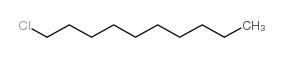
As a supplier of 2-(4-Chlorobenzyl), we are committed to providing high-quality products and technical support to our customers. If you are interested in purchasing 2-(4-Chlorobenzyl) or have any questions about its detection or analysis, please feel free to contact us for further discussion and negotiation. We also offer a wide range of related products, such as 1-Chlorodecane 1002-69-3, 2-(3,4-Dichlorobenzyl)1H Benzimidazole 213133-77-8, and 4,4'-Oxydiphenol 1965-09-9.
References
- Snyder, L. R., Kirkland, J. J., & Glajch, J. L. (2010). Practical HPLC Method Development. Wiley.
- McMaster, M. C. (2010). Gas Chromatography Basics. Wiley.
- Miller, J. N., & Miller, J. C. (2010). Statistics and Chemometrics for Analytical Chemistry. Pearson.