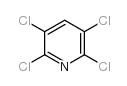
Pentachloropyridine is a fascinating compound with unique coordination properties that have intrigued chemists and researchers alike. As a leading supplier of Pentachloropyridine, I am excited to delve into the details of its coordination behavior and explore its potential applications.
Chemical Structure and Basic Properties
Pentachloropyridine, with the molecular formula C₅Cl₅N, is a highly chlorinated derivative of pyridine. The presence of five chlorine atoms on the pyridine ring significantly alters its electronic and steric properties compared to the parent pyridine molecule. The chlorine atoms are electron - withdrawing groups, which decrease the electron density on the pyridine ring and the nitrogen atom. This electron - deficient nature of Pentachloropyridine plays a crucial role in its coordination chemistry.
The pyridine ring in Pentachloropyridine has a planar structure, and the nitrogen atom has a lone pair of electrons. However, due to the strong electron - withdrawing effect of the chlorine atoms, the basicity of the nitrogen atom is much lower than that of pyridine. This reduced basicity affects its ability to form coordination bonds with metal ions.
Coordination with Metal Ions
Hard and Soft Acid - Base (HSAB) Considerations
According to the HSAB theory, metal ions can be classified as hard, soft, or borderline acids, while ligands can be classified as hard, soft, or borderline bases. Pentachloropyridine, with its electron - deficient nitrogen atom, can be considered a relatively hard base. It has a greater affinity for hard metal ions such as alkali metals (e.g., Li⁺, Na⁺, K⁺), alkaline earth metals (e.g., Mg²⁺, Ca²⁺), and some transition metals in high oxidation states (e.g., Fe³⁺, Cr³⁺).
When Pentachloropyridine coordinates with hard metal ions, the interaction is mainly electrostatic in nature. The lone pair of electrons on the nitrogen atom is donated to the metal ion, forming a coordinate covalent bond. For example, in the presence of a hard metal ion like Na⁺, Pentachloropyridine can form a simple coordination complex where the nitrogen atom of Pentachloropyridine binds to the sodium ion.


Coordination Geometry
The coordination geometry of Pentachloropyridine complexes depends on the nature of the metal ion and the number of ligands involved. In some cases, when coordinating with a single metal ion, Pentachloropyridine can act as a monodentate ligand, binding through the nitrogen atom. For example, in complexes with certain transition metals, a single Pentachloropyridine molecule may coordinate to the metal center, and the overall geometry of the complex will be influenced by other ligands present in the coordination sphere.
In more complex systems, multiple Pentachloropyridine molecules can coordinate to a single metal ion. If three Pentachloropyridine molecules coordinate to a metal ion, a trigonal - planar or trigonal - pyramidal geometry may be formed around the metal center, depending on the oxidation state and the electronic configuration of the metal.
Influence of Substituents and Solvent
The presence of the five chlorine atoms on the pyridine ring not only affects the basicity of the nitrogen atom but also the steric environment around it. The large size of the chlorine atoms can create steric hindrance, which may limit the approach of metal ions and influence the coordination behavior.
The solvent in which the coordination reaction takes place also plays an important role. Polar solvents such as water or acetonitrile can solvate both the metal ions and the Pentachloropyridine molecules. In polar solvents, the metal ions are often solvated by solvent molecules, which can compete with Pentachloropyridine for coordination sites on the metal ion. Non - polar solvents, on the other hand, may favor the formation of coordination complexes by reducing the solvation of the metal ions and allowing for a closer approach of Pentachloropyridine to the metal center.
Applications in Coordination Chemistry and Beyond
Catalysis
The coordination complexes of Pentachloropyridine can be used as catalysts in various chemical reactions. For example, some transition metal complexes with Pentachloropyridine ligands have shown catalytic activity in oxidation reactions. The electron - deficient nature of Pentachloropyridine can modulate the electronic properties of the metal center, enhancing its ability to activate substrates and promote chemical reactions.
Material Science
In material science, Pentachloropyridine - based coordination polymers can be synthesized. These polymers have potential applications in areas such as gas storage and separation. The coordination bonds between Pentachloropyridine and metal ions can form a three - dimensional network structure, which can have specific pore sizes and surface properties suitable for selective adsorption of certain gases.
Comparison with Related Compounds
When comparing Pentachloropyridine with 2,3,5,6 - Tetrachloropyridine, the difference in the number of chlorine atoms has a significant impact on their coordination properties. 2,3,5,6 - Tetrachloropyridine has one less chlorine atom on the pyridine ring, which means that the nitrogen atom is relatively less electron - deficient compared to Pentachloropyridine. As a result, 2,3,5,6 - Tetrachloropyridine is a slightly stronger base and may have different coordination affinities for metal ions. It may form more stable complexes with some metal ions, especially those that require a more electron - rich ligand.
Our Supply of Pentachloropyridine
As a reliable supplier of Pentachloropyridine, we ensure the highest quality of our product. Our Pentachloropyridine is synthesized using advanced chemical processes, and we have strict quality control measures in place to guarantee its purity and consistency.
We understand the importance of Pentachloropyridine in various research and industrial applications, and we are committed to providing our customers with the best - in - class product. Whether you are a researcher exploring the coordination chemistry of Pentachloropyridine or an industrial user looking for a high - quality raw material, we are here to meet your needs.
If you are interested in purchasing Pentachloropyridine for your projects, we encourage you to contact us for a detailed discussion. Our team of experts is ready to assist you in understanding the product specifications, pricing, and delivery options. We believe that through close cooperation, we can contribute to the success of your research and industrial endeavors.
References
- Cotton, F. A.; Wilkinson, G.; Murillo, C. A.; Bochmann, M. Advanced Inorganic Chemistry, 6th ed.; Wiley: New York, 1999.
- Pearson, R. G. "Hard and Soft Acids and Bases." Journal of the American Chemical Society 1963, 85, 3533 - 3539.
- Atwood, J. L. Inorganic and Organometallic Reaction Mechanisms, 2nd ed.; Wiley - VCH: Weinheim, 2005.