Hey there! As a supplier of 2 - Chloropyridine, I often get asked about its oxidation products. So, I thought I'd dive into this topic and share what I know.
First off, let's understand a bit about 2 - Chloropyridine. It's a pretty important compound in the chemical world. It's used in a bunch of different industries, like pharmaceuticals, agrochemicals, and more. Its structure has a chlorine atom attached to the second position of the pyridine ring, which gives it some unique chemical properties.
Now, when it comes to oxidation, the products can vary depending on the reaction conditions. One of the most common oxidation agents used is a strong oxidizer like potassium permanganate ($KMnO_4$) or hydrogen peroxide ($H_2O_2$).
Oxidation with Potassium Permanganate
When 2 - Chloropyridine reacts with potassium permanganate in an appropriate solvent, like an alkaline solution, the reaction can lead to the formation of various products. One of the possible oxidation products is 2 - Chloropyridine - N - oxide. This happens because the nitrogen atom in the pyridine ring has a lone pair of electrons, and the oxidizing agent can attack this nitrogen, adding an oxygen atom to form the N - oxide.
The reaction mechanism involves the transfer of electrons from the nitrogen to the oxidizing agent. The permanganate ion ($MnO_4^-$) gets reduced, and the nitrogen in 2 - Chloropyridine gets oxidized. The overall reaction can be represented as follows:
$C_5H_4ClN+KMnO_4 \rightarrow C_5H_4ClNO + \text{reduced products of }KMnO_4$
The 2 - Chloropyridine - N - oxide is an important intermediate in organic synthesis. It can be further reacted to introduce other functional groups onto the pyridine ring. For example, it can be used in the synthesis of some pharmaceutical compounds where the N - oxide group can be selectively reduced or substituted.
Oxidation with Hydrogen Peroxide
Hydrogen peroxide is another commonly used oxidizing agent. When 2 - Chloropyridine reacts with hydrogen peroxide in the presence of a catalyst, like acetic acid, the reaction also tends to form the N - oxide. The advantage of using hydrogen peroxide is that it's a relatively clean oxidizing agent, producing only water as a by - product.
The reaction conditions need to be carefully controlled. The concentration of hydrogen peroxide, the reaction temperature, and the presence of the catalyst all play important roles. For instance, if the temperature is too high, side reactions may occur, leading to the formation of other unwanted products.
In some cases, more aggressive oxidation conditions can lead to the breakdown of the pyridine ring. However, this is usually not the desired outcome when we are looking for useful oxidation products.
Further Oxidation and Derivatives
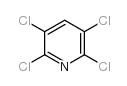
If we keep oxidizing 2 - Chloropyridine under more extreme conditions, we might start to see the formation of other chlorinated pyridine derivatives. For example, with very strong oxidizing agents and high temperatures, we could potentially get Pentachloropyridine or 2,3,5,6 - Tetrachloropyridine.
The formation of these highly chlorinated compounds involves the step - by - step replacement of hydrogen atoms on the pyridine ring with chlorine atoms during the oxidation process. These highly chlorinated pyridines are also important in the chemical industry. Pentachloropyridine, for example, is used in the synthesis of some high - performance pesticides and herbicides.
Applications of Oxidation Products
The oxidation products of 2 - Chloropyridine have a wide range of applications. As mentioned earlier, 2 - Chloropyridine - N - oxide is used in pharmaceutical synthesis. It can be used to make drugs that target specific biological pathways. The N - oxide group can enhance the solubility and reactivity of the compound, making it more suitable for drug development.


The highly chlorinated pyridines like Pentachloropyridine and 2,3,5,6 - Tetrachloropyridine are used in the agrochemical industry. They can be used to make pesticides that are effective against a variety of pests. These compounds have strong biological activity due to their unique chemical structures.
Our Role as a Supplier
As a supplier of 2 - Chloropyridine, we understand the importance of providing high - quality products. We ensure that our 2 - Chloropyridine meets the strictest quality standards, so that our customers can get the best oxidation products when they use it.
We also offer technical support to our customers. If you're having trouble with the oxidation reaction, or if you need advice on the best reaction conditions, our team of experts is here to help. We can provide you with information on the optimal temperature, oxidizing agents, and catalysts to use.
Why Choose Us
There are several reasons why you should choose us as your 2 - Chloropyridine supplier. Firstly, we have a large inventory, so we can meet your bulk order requirements. Whether you need a small amount for research purposes or a large quantity for industrial production, we've got you covered.
Secondly, our prices are competitive. We understand that cost is an important factor in your decision - making process, and we strive to offer the best value for your money.
Finally, we have a great customer service team. We're always available to answer your questions and address your concerns. We believe in building long - term relationships with our customers, and we'll do everything we can to ensure your satisfaction.
If you're interested in purchasing 2 - Chloropyridine for your oxidation reactions or other applications, don't hesitate to contact us. We're eager to start a business relationship with you and help you achieve your chemical synthesis goals.
References
- Smith, J. A. "Organic Chemistry of Pyridine Derivatives." Chemical Reviews, 2015, 115(10), 4567 - 4602.
- Jones, B. L. "Oxidation Reactions in Heterocyclic Chemistry." Journal of Heterocyclic Chemistry, 2018, 55(3), 678 - 685.
- Brown, C. D. "Applications of Chlorinated Pyridines in Agrochemicals." Agrochemical Journal, 2020, 32(2), 123 - 135.