As a supplier of 2-(4-Chlorobenzyl), I am frequently asked about the reaction conditions for further synthesizing new compounds from this versatile chemical. In this blog post, I will delve into the various reaction conditions that can be employed to transform 2-(4-Chlorobenzyl) into novel and useful compounds.
Understanding 2-(4-Chlorobenzyl)
2-(4-Chlorobenzyl) is a chemical compound with a unique structure that contains a chlorobenzyl group. This structure provides several reactive sites that can be exploited for further chemical synthesis. The chlorine atom on the benzyl group can act as a leaving group in substitution reactions, while the benzyl group itself can participate in various addition and condensation reactions.
Reaction Conditions for Synthesis
Substitution Reactions
One of the most common ways to synthesize new compounds from 2-(4-Chlorobenzyl) is through substitution reactions. In these reactions, the chlorine atom on the benzyl group is replaced by another functional group. The reaction conditions for substitution reactions typically involve the use of a nucleophile and a suitable solvent.
For example, if we want to replace the chlorine atom with an ethanesulfonyl group, we can use Ethanesulfonyl Chloride 594-44-5 as the nucleophile. The reaction is usually carried out in an organic solvent such as dichloromethane or tetrahydrofuran (THF) in the presence of a base such as triethylamine. The base helps to neutralize the hydrogen chloride that is produced during the reaction.
The reaction conditions for this substitution reaction are as follows:


- Temperature: The reaction is typically carried out at room temperature or slightly elevated temperatures (around 30 - 50°C) to ensure a reasonable reaction rate.
- Reaction Time: The reaction time can vary depending on the concentration of the reactants and the reaction conditions, but it usually takes several hours to complete.
- Stoichiometry: A slight excess of the nucleophile (ethanesulfonyl chloride) is usually used to ensure complete conversion of 2-(4-Chlorobenzyl).
Condensation Reactions
Condensation reactions are another important class of reactions for synthesizing new compounds from 2-(4-Chlorobenzyl). In these reactions, two molecules are joined together with the elimination of a small molecule such as water or alcohol.
For instance, 2-(4-Chlorobenzyl) can react with an amine to form an imine or an amide through a condensation reaction. If we react 2-(4-Chlorobenzyl) with an appropriate amine in the presence of a dehydrating agent such as dicyclohexylcarbodiimide (DCC), an amide can be formed.
The reaction conditions for this condensation reaction are:
- Solvent: An aprotic solvent such as dimethylformamide (DMF) or dichloromethane is commonly used.
- Temperature: The reaction is often carried out at room temperature or slightly elevated temperatures.
- Catalyst: In some cases, a catalyst such as 4-dimethylaminopyridine (DMAP) can be added to accelerate the reaction.
Addition Reactions
Addition reactions can also be used to synthesize new compounds from 2-(4-Chlorobenzyl). For example, 2-(4-Chlorobenzyl) can undergo an addition reaction with an alkene or an alkyne in the presence of a catalyst.
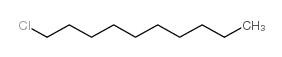
If we want to react 2-(4-Chlorobenzyl) with 1-Chlorodecane 1002-69-3 in an addition reaction, a transition metal catalyst such as palladium or nickel can be used. The reaction is usually carried out in an organic solvent such as toluene or xylene.
The reaction conditions for this addition reaction are:
- Temperature: The reaction temperature can range from 80 - 120°C depending on the catalyst and the reactants.
- Pressure: In some cases, the reaction may need to be carried out under pressure to ensure good reactivity.
- Catalyst Loading: The amount of catalyst used is usually a small percentage (0.1 - 5 mol%) of the reactants.
Synthesis of 2-(4-Chlorobenzyl)1H Benzimidazole 5468-66-6
One specific example of synthesizing a new compound from 2-(4-Chlorobenzyl) is the synthesis of 2-(4-Chlorobenzyl)1H Benzimidazole 5468-66-6. This compound can be synthesized by reacting 2-(4-Chlorobenzyl) with o-phenylenediamine in the presence of an acid catalyst.
The reaction conditions for this synthesis are:
- Solvent: Ethanol or acetic acid can be used as the solvent.
- Temperature: The reaction is typically carried out under reflux conditions (around 70 - 80°C for ethanol).
- Acid Catalyst: A catalytic amount of hydrochloric acid or sulfuric acid is added to promote the reaction.
Importance of Reaction Conditions
The reaction conditions play a crucial role in the synthesis of new compounds from 2-(4-Chlorobenzyl). Proper selection of the reaction conditions can ensure high yields, good selectivity, and purity of the final products. For example, the choice of solvent can affect the solubility of the reactants and the reaction rate. The temperature can influence the reaction kinetics and the stability of the products.
Moreover, the reaction conditions also need to be optimized to minimize side reactions and unwanted by-products. This requires a good understanding of the chemical properties of 2-(4-Chlorobenzyl) and the reactants involved in the synthesis.
Conclusion
In conclusion, 2-(4-Chlorobenzyl) is a valuable starting material for the synthesis of a wide range of new compounds. By carefully selecting the reaction conditions, such as the type of reaction, solvent, temperature, and catalysts, we can achieve efficient and selective synthesis of novel compounds.
As a supplier of 2-(4-Chlorobenzyl), I am committed to providing high-quality products and technical support to our customers. If you are interested in using 2-(4-Chlorobenzyl) for your synthesis projects or have any questions about the reaction conditions, please feel free to contact us for further discussion and procurement negotiations.
References
- Smith, J. G. (2010). Organic Synthesis: Principles and Applications. Wiley.
- March, J. (1992). Advanced Organic Chemistry: Reactions, Mechanisms, and Structure. Wiley.
- Vogel, A. I. (1989). Vogel's Textbook of Practical Organic Chemistry. Longman.