As a supplier of 2 - Chloropyridine, I often encounter customers interested in its chemical reactions, especially the Stille reaction. The Stille reaction is a powerful tool in organic synthesis, enabling the formation of carbon - carbon bonds between organotin compounds and organic electrophiles. In this blog, we will delve into the reaction conditions for the Stille reaction of 2 - Chloropyridine.
Overview of the Stille Reaction
The Stille reaction, named after John Kenneth Stille, is a palladium - catalyzed cross - coupling reaction between an organotin compound (organostannane) and an organic electrophile, typically an organohalide or triflate. The general reaction scheme is as follows:
$R - SnR'_3+R'' - X\xrightarrow{Pd - catalyst}R - R''+R'_3SnX$
where $R$ is an organic group attached to the tin atom, $R'$ is usually an alkyl group (commonly butyl), $R''$ is another organic group, and $X$ is a halide or triflate.
Reaction Conditions for the Stille Reaction of 2 - Chloropyridine
Catalyst
The choice of catalyst is crucial for the Stille reaction of 2 - Chloropyridine. Palladium complexes are the most commonly used catalysts. Palladium(0) complexes such as tetrakis(triphenylphosphine)palladium(0) $[Pd(PPh_3)_4]$ are frequently employed. This catalyst is highly effective in promoting the oxidative addition of 2 - Chloropyridine to the palladium center.
The oxidative addition step is the first key step in the Stille reaction mechanism. The palladium(0) species coordinates to the carbon - chlorine bond of 2 - Chloropyridine, and then inserts into the bond, forming a palladium(II) intermediate. The reactivity of the catalyst can be influenced by the ligands attached to the palladium. Triphenylphosphine ligands are widely used because they can stabilize the palladium species and also affect the selectivity and reactivity of the reaction.
Solvent
The solvent plays an important role in the Stille reaction. Common solvents include polar aprotic solvents such as N,N - dimethylformamide (DMF), dimethyl sulfoxide (DMSO), and tetrahydrofuran (THF). DMF is often a preferred solvent for the Stille reaction of 2 - Chloropyridine. It has a high boiling point, which allows the reaction to be carried out at elevated temperatures if necessary.


The polarity of the solvent affects the solubility of the reactants and the catalyst. In addition, the solvent can also influence the reaction rate and selectivity. For example, the use of a more polar solvent can enhance the solubility of the ionic species formed during the reaction, which may promote the reaction kinetics.
Organotin Compound
The organotin compound used in the Stille reaction with 2 - Chloropyridine should have appropriate reactivity. The most commonly used organotin compounds are alkyltins and aryltins. For example, tributylphenyltin can react with 2 - Chloropyridine in the presence of a palladium catalyst.
The choice of the organic group on the tin atom can affect the reaction rate and selectivity. Aryl - substituted organotin compounds are generally more reactive than alkyl - substituted ones in the Stille reaction. The reactivity is related to the ability of the organic group to stabilize the transition state during the transmetalation step, which is the second key step in the Stille reaction mechanism.
Base
Although the Stille reaction can proceed without a base in some cases, the addition of a base can sometimes improve the reaction rate and yield. Bases such as potassium carbonate $(K_2CO_3)$ or cesium carbonate $(Cs_2CO_3)$ can be used. The base can help to scavenge the acid formed during the reaction, which may otherwise inhibit the catalyst.
In addition, the base can also influence the solubility of the reactants and the reaction equilibrium. For example, cesium carbonate is a stronger base than potassium carbonate and can sometimes promote the reaction more effectively, especially in cases where the reaction is sluggish.
Temperature
The reaction temperature is an important factor in the Stille reaction of 2 - Chloropyridine. The reaction is usually carried out at elevated temperatures, typically in the range of 80 - 120 °C. Higher temperatures can increase the reaction rate by providing more energy for the activation of the reactants.
However, the temperature should not be too high, as it may cause side reactions such as the decomposition of the organotin compound or the catalyst. Therefore, the optimal temperature needs to be carefully selected based on the specific reactants and reaction conditions.
Considerations and Challenges
Toxicity of Organotin Compounds
One of the major challenges in the Stille reaction is the toxicity of organotin compounds. Organotin compounds are known to be toxic to the environment and human health. Therefore, appropriate safety measures should be taken during the handling and disposal of these compounds.
Side Reactions
Side reactions can occur during the Stille reaction of 2 - Chloropyridine. For example, homocoupling reactions may take place, where two molecules of 2 - Chloropyridine react with each other or two molecules of the organotin compound react with each other. These side reactions can reduce the yield of the desired product.
To minimize side reactions, the reaction conditions need to be carefully optimized. For example, the choice of catalyst, solvent, and reaction temperature can all affect the selectivity of the reaction.
Our 2 - Chloropyridine Product
As a reliable supplier of 2 - Chloropyridine, we offer high - quality products that meet the strictest industry standards. Our 2 - Chloropyridine is produced using advanced manufacturing processes, ensuring its purity and stability.
We also understand the importance of providing comprehensive technical support to our customers. Whether you are conducting research on the Stille reaction or other chemical reactions involving 2 - Chloropyridine, our team of experts is ready to assist you.
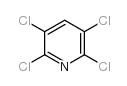
In addition to 2 - Chloropyridine, we also supply other pyridine derivatives such as [2,3,5,6 - Tetrachloropyridine](/pyridine - derivatives/2 - 3 - 5 - 6 - tetrachloropyridine.html) and [Pentachloropyridine](/pyridine - derivatives/pentachloropyridine.html). These products are widely used in various fields, including pharmaceuticals, agrochemicals, and materials science.
Contact Us for Procurement
If you are interested in purchasing 2 - Chloropyridine or other pyridine derivatives from us, please feel free to contact us for a detailed discussion. We are committed to providing you with the best products and services at competitive prices. Our team will work closely with you to understand your specific requirements and ensure a smooth procurement process.
References
- Stille, J. K. Angew. Chem. Int. Ed. Engl. 1986, 25, 508 - 524.
- Farina, V.; Krishnamurthy, V.; Scott, W. J. Org. React. 1997, 50, 1 - 652.
- Hassan, J.; Sévignon, M.; Gozzi, C.; Schulz, E.; Lemaire, M. Chem. Rev. 2002, 102, 1359 - 1469.