Hey there! As a supplier of 2-Chloropyridine, I've gotten a bunch of questions about what happens when it reacts with nucleophiles. So, I thought I'd dive into this topic and share some insights with you all.
First off, let's quickly understand what 2-Chloropyridine is. It's a heterocyclic organic compound with a chlorine atom attached to the second position of the pyridine ring. Pyridine itself is a six - membered aromatic ring containing one nitrogen atom. The presence of that chlorine atom makes 2-Chloropyridine quite reactive towards nucleophiles.
General Reaction Mechanism
When 2-Chloropyridine reacts with nucleophiles, it typically follows an SNAr (nucleophilic aromatic substitution) mechanism. Unlike typical SN2 reactions where the nucleophile attacks the carbon atom directly and the leaving group departs simultaneously, SNAr reactions have a more complex process.
In an SNAr reaction of 2-Chloropyridine, the nucleophile first adds to the carbon atom bearing the chlorine atom. This forms a resonance - stabilized intermediate called a Meisenheimer complex. The negative charge in this complex is delocalized over the pyridine ring, which is why it's relatively stable. Then, the chlorine atom leaves as a chloride ion, regenerating the aromaticity of the pyridine ring and forming the substitution product.
Reaction Products with Different Nucleophiles
Reaction with Hydroxide Ions (OH⁻)
When 2-Chloropyridine reacts with hydroxide ions (for example, in an aqueous solution of sodium hydroxide), the hydroxide ion acts as a nucleophile. The reaction results in the formation of 2 - Hydroxypyridine. This is a common substitution reaction, and the mechanism involves the addition of the hydroxide ion to the carbon - chlorine bond, followed by the expulsion of the chloride ion.
The overall reaction can be written as:
C₅H₄NCl + OH⁻ → C₅H₄NOH+ Cl⁻


2 - Hydroxypyridine has various applications in the pharmaceutical and agrochemical industries. It can be used as an intermediate for the synthesis of drugs and pesticides.
Reaction with Amines
Amines are another class of common nucleophiles. When 2-Chloropyridine reacts with an amine, say an alkylamine like methylamine (CH₃NH₂), the nitrogen atom in the amine attacks the carbon atom with the chlorine. The product formed is a 2 - aminopyridine derivative. For example, with methylamine, the reaction gives 2 - (methylamino)pyridine.
The reaction equation is:
C₅H₄NCl+ CH₃NH₂ → C₅H₄N(CH₃)NH + HCl
2 - aminopyridine derivatives are important in the synthesis of dyes, pharmaceuticals, and coordination compounds. They can act as ligands in metal - complex chemistry, and also serve as building blocks for the synthesis of biologically active molecules.
Reaction with Alkoxide Ions
Alkoxide ions (RO⁻), such as methoxide (CH₃O⁻) or ethoxide (C₂H₅O⁻), can also react with 2-Chloropyridine. The alkoxide ion attacks the carbon - chlorine bond, and the result is the formation of 2 - alkoxypyridine. For instance, when reacting with sodium methoxide in methanol, 2 - Chloropyridine forms 2 - methoxypyridine.
The reaction is:
C₅H₄NCl+ CH₃O⁻ → C₅H₄NOCH₃+ Cl⁻
2 - alkoxypyridines are useful in organic synthesis. They can be further modified to introduce other functional groups, and are also used in the preparation of some types of polymers.
Other Related Pyridine Derivatives
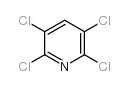
While we're on the topic of pyridine derivatives, it's worth mentioning some related compounds like Pentachloropyridine and 2,3,5,6 - Tetrachloropyridine. These highly chlorinated pyridines have different reactivities compared to 2-Chloropyridine.
Pentachloropyridine has all five carbon atoms on the pyridine ring substituted with chlorine atoms. Due to the high electron - withdrawing effect of the chlorine atoms, it's extremely reactive towards nucleophiles. It can undergo multiple substitution reactions, and is often used in the synthesis of highly functionalized pyridine compounds.
2,3,5,6 - Tetrachloropyridine has four chlorine atoms on the pyridine ring. It also shows enhanced reactivity towards nucleophiles compared to 2-Chloropyridine. The reaction products with nucleophiles can be used in the production of herbicides, fungicides, and other agrochemicals.
Why Choose Our 2 - Chloropyridine?
As a supplier of 2 - Chloropyridine, we take pride in offering high - quality products. Our 2 - Chloropyridine is produced through a strict manufacturing process, ensuring its purity and stability. We understand that in chemical reactions, the quality of the starting material can significantly affect the reaction outcome. That's why we go the extra mile to provide you with the best 2 - Chloropyridine on the market.
Whether you're conducting research on new reaction mechanisms, or synthesizing valuable products like pharmaceuticals or agrochemicals, our 2 - Chloropyridine can be a reliable choice. We also offer competitive pricing and flexible packaging options to meet your specific needs.
Conclusion
In conclusion, 2 - Chloropyridine is a versatile compound that can react with a variety of nucleophiles to form different and useful products. The SNAr mechanism governs these reactions, and the products have wide - ranging applications in multiple industries.
If you're interested in purchasing 2 - Chloropyridine for your projects, don't hesitate to get in touch with us. We're here to assist you with all your procurement needs and look forward to establishing a long - term business relationship.
References
- March, J. Advanced Organic Chemistry: Reactions, Mechanisms, and Structure. Wiley, 2007.
- Smith, M. B., & March, J. March's Advanced Organic Chemistry: Reactions, Mechanisms, and Structure. Wiley, 2013.