In the realm of chemistry, 1H - Benzimidazole stands out as a compound of significant interest. As a dedicated supplier of 1H Benzimidazole, I often find myself in discussions about its unique self - assembly properties. These properties not only hold great theoretical value but also have far - reaching implications in various practical applications.
Self - assembly is a remarkable process in which individual components spontaneously organize themselves into well - defined structures without any external guidance. In the case of 1H - Benzimidazole, its molecular structure plays a pivotal role in dictating its self - assembly behavior. The 1H - Benzimidazole molecule consists of a benzene ring fused with an imidazole ring. This specific structure endows it with a set of electronic and steric characteristics that govern how it interacts with other molecules.
One of the key aspects of 1H - Benzimidazole's self - assembly is its ability to form hydrogen bonds. The imidazole ring in 1H - Benzimidazole has two nitrogen atoms, each with a lone pair of electrons. These nitrogen atoms can act as hydrogen bond acceptors, while the hydrogen atoms attached to the nitrogen in the imidazole ring can act as hydrogen bond donors. Through these hydrogen - bonding interactions, 1H - Benzimidazole molecules can associate with each other to form dimers, trimers, or even extended supramolecular structures. For example, in a suitable solvent environment, two 1H - Benzimidazole molecules may come together to form a dimer through a pair of N - H...N hydrogen bonds. This dimer formation is an initial step in the self - assembly process and sets the stage for the development of more complex structures.
In addition to hydrogen bonding, π - π stacking interactions also contribute significantly to the self - assembly of 1H - Benzimidazole. The aromatic rings in 1H - Benzimidazole have a cloud of π - electrons above and below the plane of the ring. These π - electron clouds can interact with the π - electron clouds of neighboring 1H - Benzimidazole molecules through electrostatic interactions. This π - π stacking can lead to the formation of columnar or layered structures. When multiple 1H - Benzimidazole molecules stack on top of each other through π - π interactions, they can form one - dimensional columns or two - dimensional layers. These structures can have unique physical and chemical properties compared to the individual molecules.
The self - assembly properties of 1H - Benzimidazole are highly sensitive to the surrounding environment. Solvent plays a crucial role in determining the outcome of the self - assembly process. Different solvents have different polarities and hydrogen - bonding abilities, which can either promote or inhibit the self - assembly of 1H - Benzimidazole. For instance, polar solvents like water or ethanol can interact strongly with the 1H - Benzimidazole molecules through hydrogen bonding, which may disrupt the intermolecular hydrogen bonding between 1H - Benzimidazole molecules themselves. On the other hand, non - polar solvents like toluene or hexane may encourage the self - assembly of 1H - Benzimidazole by minimizing the interference from the solvent molecules.
Temperature is another important factor that affects the self - assembly of 1H - Benzimidazole. At lower temperatures, the thermal motion of the molecules is reduced, which favors the formation of stable intermolecular interactions such as hydrogen bonds and π - π stacking. As a result, more ordered self - assembled structures are likely to form. Conversely, at higher temperatures, the increased thermal energy can break the intermolecular interactions, leading to the disassembly of the self - assembled structures.


The self - assembly properties of 1H - Benzimidazole have numerous practical applications. In the field of materials science, the self - assembled structures of 1H - Benzimidazole can be used to create new functional materials. For example, the columnar or layered structures formed by 1H - Benzimidazole can have unique electrical or optical properties. These structures can be incorporated into electronic devices such as organic field - effect transistors or light - emitting diodes to improve their performance.
In the area of drug delivery, the self - assembly of 1H - Benzimidazole can be exploited to design drug carriers. By modifying the 1H - Benzimidazole molecule with appropriate functional groups, it can self - assemble into nanoparticles or micelles that can encapsulate drugs. These drug - loaded carriers can then be targeted to specific cells or tissues in the body, improving the efficacy and reducing the side effects of the drugs.
In the synthesis of metal - organic frameworks (MOFs), 1H - Benzimidazole can serve as a ligand. The self - assembly of 1H - Benzimidazole with metal ions can lead to the formation of MOFs with well - defined pore structures. These MOFs can be used for gas storage, separation, and catalysis applications.
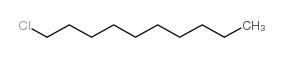
As a supplier of 1H Benzimidazole, I understand the importance of providing high - quality products to meet the diverse needs of our customers. Our 1H - Benzimidazole is produced with strict quality control measures to ensure its purity and consistency. We also offer a wide range of related products that can be used in conjunction with 1H - Benzimidazole. For example, if you are interested in exploring the self - assembly of 1H - Benzimidazole in different reaction systems, you may also need some basic chemicals such as 1-Chlorodecane 1002-69-3, 3-Chloropropyl Methyl Ether 36215-07-3, or 2,2'-Dichlorodiethyl Ether 111-44-4.
If you are conducting research on the self - assembly properties of 1H - Benzimidazole or have any industrial applications in mind, we are here to support you. Our team of experts can provide technical advice and assistance to help you make the most of our products. We are committed to building long - term partnerships with our customers and look forward to discussing your specific requirements. Whether you need a small quantity for research purposes or a large - scale supply for industrial production, we are ready to meet your needs. Don't hesitate to reach out to us for further information and to start a procurement negotiation.
References
- Lehn, J. - M. (1995). Supramolecular chemistry - scope and perspectives molecules, supermolecules, and molecular devices. Angewandte Chemie International Edition in English, 34(2), 231 - 239.
- Desiraju, G. R. (1995). The crystal as a supramolecular entity. Accounts of Chemical Research, 28(1), 271 - 279.
- Yaghi, O. M., O'Keeffe, M., Ockwig, N. W., Chae, H. K., Eddaoudi, M., & Kim, J. (2003). Reticular synthesis and the design of new materials. Nature, 423(6941), 705 - 714.