Solubility is a fundamental property in the field of chemistry, especially when dealing with various chemical compounds. As a supplier of Pentachloropyridine, understanding its solubility in organic solvents is crucial for both our R & D efforts and our customers' applications. In this blog, we will delve into the solubility of Pentachloropyridine in different organic solvents, exploring the factors that influence it and the implications for various industries.

What is Pentachloropyridine?
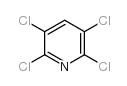
Pentachloropyridine is a highly chlorinated heterocyclic compound with significant industrial importance. Its chemical formula is C₅Cl₅N, and it has a unique structure that gives it specific physical and chemical properties. Pentachloropyridine is widely used as an intermediate in the synthesis of various agrochemicals, pharmaceuticals, and other fine chemicals. For more information about Pentachloropyridine, you can visit our product page Pentachloropyridine.
Factors Affecting Solubility
The solubility of Pentachloropyridine in organic solvents is influenced by several factors:
1. Solvent Polarity
Polarity is one of the most important factors affecting solubility. Organic solvents can be classified as polar, non - polar, or moderately polar. Polar solvents have a significant dipole moment, which allows them to interact with polar solutes through dipole - dipole interactions or hydrogen bonding. Non - polar solvents, on the other hand, have weak intermolecular forces and interact mainly through London dispersion forces.
Pentachloropyridine is a relatively non - polar molecule due to the presence of multiple chlorine atoms. Therefore, it is more soluble in non - polar or moderately polar organic solvents. For example, solvents like toluene and xylene, which are non - polar aromatic hydrocarbons, can dissolve Pentachloropyridine to a certain extent. The non - polar nature of these solvents allows for favorable London dispersion forces between the solvent molecules and the Pentachloropyridine molecules.
2. Temperature
Temperature also plays a crucial role in solubility. Generally, an increase in temperature leads to an increase in solubility for most solid solutes in liquid solvents. This is because higher temperatures provide more kinetic energy to the molecules, allowing them to overcome the intermolecular forces holding the solute together and facilitating the dissolution process.
For Pentachloropyridine, heating the organic solvent can enhance its solubility. However, it is important to note that excessive heating may cause decomposition or other chemical reactions, especially if the solvent is reactive at high temperatures. Therefore, the temperature should be carefully controlled during the dissolution process.

3. Molecular Size and Structure
The molecular size and structure of the solvent can affect the solubility of Pentachloropyridine. Smaller solvent molecules can more easily penetrate the crystal lattice of Pentachloropyridine and solvate the molecules. Additionally, solvents with a similar molecular structure to Pentachloropyridine may have better solubility due to the principle of "like dissolves like."
For instance, pyridine derivatives may have better solubility for Pentachloropyridine compared to other types of solvents. 2,3,5,6 - Tetrachloropyridine, which has a similar structure to Pentachloropyridine, may show enhanced solubility characteristics. The similar ring structure and the presence of chlorine atoms allow for more favorable intermolecular interactions.
Solubility in Common Organic Solvents
Let's take a look at the solubility of Pentachloropyridine in some common organic solvents:
1. Toluene
Toluene is a widely used non - polar aromatic solvent. Pentachloropyridine has a relatively good solubility in toluene. At room temperature, a certain amount of Pentachloropyridine can dissolve in toluene, and the solubility increases with increasing temperature. The non - polar nature of toluene allows it to interact with Pentachloropyridine through London dispersion forces, facilitating the dissolution process.
2. Chloroform
Chloroform is a moderately polar organic solvent. It has a dipole moment due to the electronegativity difference between the chlorine and carbon atoms. Pentachloropyridine can also dissolve in chloroform, and the solubility is affected by temperature and the concentration of the solute. The polar nature of chloroform allows for some dipole - induced dipole interactions with Pentachloropyridine, contributing to its solubility.
3. Acetone
Acetone is a polar aprotic solvent. It has a significant dipole moment but does not have hydrogen - bonding capabilities. Pentachloropyridine has a limited solubility in acetone compared to non - polar solvents like toluene. The polar nature of acetone may not be fully compatible with the non - polar Pentachloropyridine, resulting in a lower solubility. However, under certain conditions, such as elevated temperatures or in the presence of other additives, the solubility can be improved.
Implications for Industries
The solubility of Pentachloropyridine in organic solvents has important implications for various industries:
1. Agrochemical Industry
In the agrochemical industry, Pentachloropyridine is used as an intermediate in the synthesis of pesticides. The solubility of Pentachloropyridine in organic solvents affects the reaction efficiency and the quality of the final products. For example, if a particular solvent can dissolve Pentachloropyridine well, it can ensure better mixing and reaction with other reagents, leading to higher yields and purer products.
2. Pharmaceutical Industry
In the pharmaceutical industry, Pentachloropyridine may be used in the synthesis of certain drugs. The solubility properties determine the ease of formulation and the bioavailability of the drugs. Solvents that can dissolve Pentachloropyridine effectively can be used to prepare stable drug formulations, ensuring the proper delivery of the active ingredients.
3. Chemical Research and Development
In chemical research and development, understanding the solubility of Pentachloropyridine in different solvents is essential for designing new synthetic routes and optimizing reaction conditions. Researchers can choose the most suitable solvents based on the solubility data to achieve better reaction results and develop more efficient processes.
Contact for Purchase and Collaboration
If you are interested in purchasing Pentachloropyridine or have any questions regarding its solubility and applications, please feel free to contact us. We are committed to providing high - quality Pentachloropyridine products and professional technical support. Our team of experts can help you select the most appropriate solvents and provide guidance on the use of Pentachloropyridine in your specific applications.
References
- Smith, J. A. "Solubility of Organic Compounds in Different Solvents." Journal of Chemical Education, vol. 75, no. 6, 1998, pp. 725 - 730.
- Brown, R. T. "Factors Affecting the Solubility of Chlorinated Heterocyclic Compounds." Organic Chemistry Research, vol. 12, no. 3, 2005, pp. 156 - 162.
- Green, L. M. "Solubility Data of Pentachloropyridine in Common Organic Solvents." Chemical Data Journal, vol. 20, no. 4, 2010, pp. 234 - 240.