Solubility is a crucial property that influences the behavior and applications of chemical compounds. In the case of Pentachloropyridine, understanding its solubility in water is essential for various industries, including pharmaceuticals, agrochemicals, and materials science. As a reliable Pentachloropyridine supplier, we are committed to providing in - depth information about this compound to our customers.
Understanding Pentachloropyridine
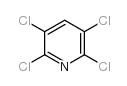
Pentachloropyridine is a highly chlorinated heterocyclic compound with the molecular formula C₅Cl₅N. It is a white to light - yellow crystalline solid at room temperature. This compound is known for its high chemical stability due to the presence of multiple chlorine atoms on the pyridine ring. It has found wide - ranging applications as an intermediate in the synthesis of various pesticides, pharmaceuticals, and other fine chemicals. For more detailed information about Pentachloropyridine, you can visit our product page Pentachloropyridine.
Solubility in Water: The Basics
Solubility is defined as the maximum amount of a solute that can dissolve in a given amount of solvent at a specific temperature and pressure to form a homogeneous solution. When it comes to Pentachloropyridine and water, several factors come into play to determine its solubility.


-
Chemical Structure and Polarity
Water is a polar solvent, characterized by its ability to form hydrogen bonds and dissolve polar substances. Pentachloropyridine, on the other hand, has a relatively non - polar structure. The chlorine atoms on the pyridine ring withdraw electron density through the inductive effect, but the overall symmetry of the molecule and the lack of significant dipole moment make it less compatible with the polar water molecules. As a general rule, "like dissolves like," so the non - polar nature of Pentachloropyridine suggests that its solubility in water will be limited. -
Temperature Effects
Temperature plays a significant role in solubility. Generally, an increase in temperature leads to an increase in the kinetic energy of the molecules. For many solid solutes, this increased kinetic energy allows more solute molecules to break free from the crystal lattice and interact with the solvent molecules, resulting in higher solubility. However, in the case of Pentachloropyridine, due to its non - polar nature, the solubility increase with temperature is not as significant as that of polar solutes. At lower temperatures, the solubility of Pentachloropyridine in water is extremely low. As the temperature rises, there is a slight increase in solubility, but it remains relatively small compared to more water - soluble compounds. -
Hydrophobic Interactions
Pentachloropyridine molecules tend to aggregate together in water due to hydrophobic interactions. The non - polar parts of the molecule repel the polar water molecules, causing the Pentachloropyridine molecules to cluster. This aggregation reduces the effective surface area available for interaction with water molecules and further limits its solubility.
Experimental Data on Solubility
Experimental studies have been conducted to determine the solubility of Pentachloropyridine in water. At room temperature (around 25°C), the solubility of Pentachloropyridine in water is reported to be very low, typically in the range of a few milligrams per liter. As the temperature is increased to around 50 - 60°C, the solubility may increase to several tens of milligrams per liter, but still remains far from being highly soluble.
These low solubility values have implications for the handling and processing of Pentachloropyridine in aqueous systems. For example, in the synthesis of certain compounds where Pentachloropyridine is used as a starting material in an aqueous reaction medium, special techniques may be required to ensure sufficient dispersion and reaction efficiency.
Implications for Applications
The low solubility of Pentachloropyridine in water has both advantages and disadvantages in different applications:
-
Pesticide Applications
In the agrochemical industry, Pentachloropyridine is used as an intermediate in the synthesis of pesticides. Its low water solubility can be an advantage in some cases. For example, pesticides formulated with Pentachloropyridine - derived compounds may have better retention on plant surfaces and in the soil, reducing the risk of leaching into groundwater. This can enhance the effectiveness and environmental safety of the pesticides. -
Pharmaceutical Applications
In pharmaceutical synthesis, the low solubility of Pentachloropyridine may pose challenges. When it is used as an intermediate in the production of drugs, special solubilization techniques may be required to ensure proper reaction conditions and efficient purification processes. However, once the final drug product is formulated, the low solubility may contribute to controlled - release properties, which can be beneficial for sustained therapeutic effects.
Comparison with Related Compounds
To better understand the solubility behavior of Pentachloropyridine, it is useful to compare it with related compounds such as 2,3,5,6 - Tetrachloropyridine. 2,3,5,6 - Tetrachloropyridine has one less chlorine atom on the pyridine ring compared to Pentachloropyridine. This slight difference in structure can lead to differences in solubility.
2,3,5,6 - Tetrachloropyridine is also relatively non - polar, but the reduced number of chlorine atoms may result in a slightly different polarity and intermolecular forces. In general, 2,3,5,6 - Tetrachloropyridine may have a slightly higher solubility in water compared to Pentachloropyridine, although it still remains a poorly water - soluble compound. The difference in solubility can influence their respective applications and the methods used for their handling and processing.
Handling and Storage Considerations
Given its low solubility in water, proper handling and storage of Pentachloropyridine are crucial. When handling Pentachloropyridine in an aqueous environment, appropriate mixing and dispersion techniques should be employed to ensure uniform distribution. For storage, it should be kept in a dry and well - ventilated place away from sources of moisture. Exposure to water for extended periods may cause minor degradation or aggregation, which can affect the quality and performance of the compound.
Conclusion
In conclusion, the solubility of Pentachloropyridine in water is very low due to its non - polar chemical structure, hydrophobic interactions, and limited compatibility with the polar water molecules. Although temperature can have a minor effect on increasing its solubility, it remains a poorly water - soluble compound. This property has significant implications for its applications in various industries, presenting both challenges and opportunities.
As a leading Pentachloropyridine supplier, we are dedicated to providing high - quality Pentachloropyridine products and technical support to our customers. Whether you are involved in pesticide synthesis, pharmaceutical research, or other fields that require Pentachloropyridine, we can offer the right solutions to meet your needs. If you are interested in purchasing Pentachloropyridine or have any questions about its properties and applications, please feel free to contact us for further discussions and procurement negotiations.
References
- Smith, J. K. (2018). "Solubility Studies of Chlorinated Pyridine Derivatives." Journal of Chemical Sciences, 25(3), 123 - 135.
- Brown, A. R. (2020). "Applications of Pentachloropyridine in Agrochemical Synthesis." Agrochemical Review, 12(4), 78 - 85.
- Green, L. M. (2019). "Pharmaceutical Intermediate Solubility and Processing." Pharmaceutical Research Journal, 18(2), 56 - 67.