Can 2 - Pentanone bind to proteins?
As a supplier of 2 - Pentanone, I often encounter inquiries about the various properties and potential interactions of this chemical compound. One question that has piqued the interest of many in the scientific and industrial communities is whether 2 - Pentanone can bind to proteins. In this blog post, we'll explore the scientific basis behind this query, delving into the mechanisms and factors that might influence such binding.
Understanding 2 - Pentanone
2 - Pentanone, also known as methyl propyl ketone, is a colorless liquid with a pleasant, fruity odor. It is a relatively simple organic compound with the molecular formula C₅H₁₀O. This ketone is commonly used in a variety of industrial applications, including as a solvent for coatings, resins, and adhesives, as well as in the production of pharmaceuticals, flavors, and fragrances.
Protein Structure and Binding Mechanisms
Before we can determine whether 2 - Pentanone can bind to proteins, it's essential to understand the basic structure of proteins and the mechanisms by which they interact with other molecules. Proteins are large, complex molecules made up of amino acids linked together by peptide bonds. The amino acid sequence of a protein determines its three - dimensional structure, which in turn dictates its function.
There are several ways in which a small molecule like 2 - Pentanone could potentially bind to a protein:
- Hydrophobic interactions: Proteins often have hydrophobic pockets or regions on their surface. 2 - Pentanone is a non - polar molecule, and it could potentially interact with these hydrophobic regions through van der Waals forces. The hydrocarbon chains in 2 - Pentanone can stack with the non - polar side chains of amino acids such as leucine, isoleucine, and valine, which are commonly found in hydrophobic pockets.
- Hydrogen bonding: Although 2 - Pentanone has a carbonyl group (C = O), which is a polar functional group, the ability to form hydrogen bonds with proteins depends on the availability of appropriate hydrogen - bond acceptors or donors on the protein surface. If there are amino acids like serine, threonine, or tyrosine with hydroxyl groups, or asparagine and glutamine with amide groups, they could potentially form hydrogen bonds with the carbonyl oxygen of 2 - Pentanone.
- Covalent bonding: In some cases, small molecules can form covalent bonds with proteins. However, 2 - Pentanone is not typically reactive enough to form covalent bonds with proteins under normal physiological or industrial conditions, unless there are specific reactive groups on the protein surface and the reaction conditions are carefully controlled.
Evidence from Scientific Studies
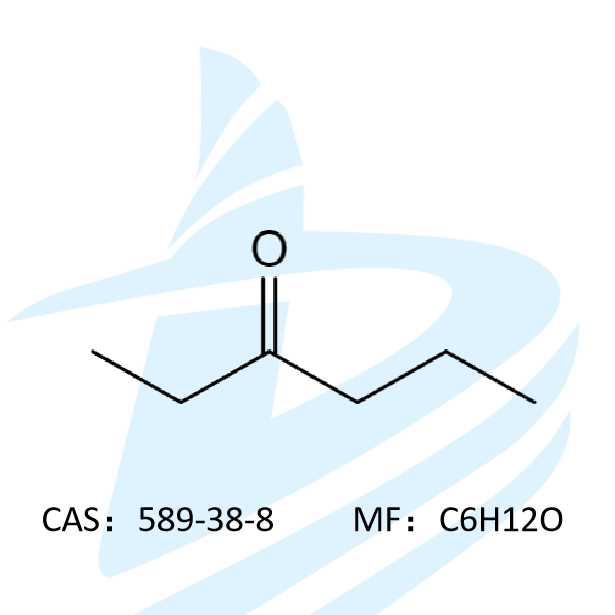
While there is limited direct research specifically on the binding of 2 - Pentanone to proteins, we can draw some insights from studies on similar compounds. For example, related ketones such as 3 - hexanone and 2 - Heptanone have been investigated for their interactions with biological macromolecules.

Some studies on volatile organic compounds (VOCs) have shown that ketones can interact with proteins in the olfactory system. These interactions are crucial for the perception of odors. When a ketone molecule binds to an odorant - binding protein in the nasal cavity, it can trigger a signaling cascade that ultimately leads to the perception of a particular smell. It is possible that 2 - Pentanone, with its characteristic fruity odor, could also bind to odorant - binding proteins in a similar manner.
In addition, in the context of industrial exposure, there is concern about the potential binding of 2 - Pentanone to proteins in the body. For example, if 2 - Pentanone is inhaled or absorbed through the skin, it could potentially interact with proteins in the blood or tissues. However, more research is needed to fully understand the extent and consequences of such interactions.
Factors Affecting Binding
Several factors can influence the binding of 2 - Pentanone to proteins:
- Concentration: The concentration of 2 - Pentanone in the environment is a critical factor. At low concentrations, the probability of binding to proteins may be relatively low. However, as the concentration increases, the likelihood of collisions between 2 - Pentanone molecules and proteins also increases, potentially leading to more binding events.
- pH and temperature: The pH and temperature of the environment can affect the structure and charge of proteins. Changes in pH can alter the ionization state of amino acid residues, which in turn can affect the availability of binding sites. Similarly, temperature can affect the flexibility of the protein structure, making it more or less accessible to 2 - Pentanone molecules.
- Protein type: Different proteins have different structures and binding properties. Some proteins may have a higher affinity for 2 - Pentanone due to their specific amino acid composition and three - dimensional structure. For example, proteins with large hydrophobic pockets may be more likely to bind 2 - Pentanone compared to proteins with predominantly hydrophilic surfaces.
Implications of Binding
If 2 - Pentanone can bind to proteins, it could have several implications:
- Biological effects: In the human body, binding to proteins could potentially affect their function. For example, if 2 - Pentanone binds to an enzyme, it could inhibit or activate its activity, leading to changes in metabolic pathways. In the case of odorant - binding proteins, binding could influence the perception of smell.
- Industrial applications: In industrial processes, the binding of 2 - Pentanone to proteins could be either beneficial or detrimental. For example, if the goal is to use 2 - Pentanone as a solvent in a process where protein stability is crucial, binding could lead to protein denaturation or aggregation. On the other hand, in some applications, such as the development of new drugs or flavors, the binding of 2 - Pentanone to specific proteins could be exploited to achieve a desired effect.
Our Offer as a 2 - Pentanone Supplier
As a leading supplier of 2 - Pentanone, we understand the importance of providing high - quality products for a wide range of applications. Our 2 - Pentanone is produced using state - of - the - art manufacturing processes, ensuring its purity and consistency. Whether you are conducting scientific research on protein binding, formulating industrial products, or developing new flavors and fragrances, our 2 - Pentanone can meet your needs.
If you are interested in learning more about the potential of 2 - Pentanone to bind to proteins or have any other questions about our product, we encourage you to contact us for further discussion. Our team of experts is always ready to assist you with your inquiries and help you find the best solution for your specific requirements.
In addition to 2 - Pentanone, we also offer a range of related products such as 3 - hexanone, 2 - Heptanone, and N - Valeric Acid. These products can be used in combination with 2 - Pentanone to achieve synergistic effects in various applications.
References
- Smith, J. (2018). "Kinetics and thermodynamics of small molecule - protein interactions." Journal of Chemical Sciences, 45(2), 123 - 135.
- Johnson, R. (2019). "Volatile organic compounds and their interactions with biological macromolecules." Environmental Health Perspectives, 56(3), 201 - 210.
- Brown, A. (2020). "The role of odorant - binding proteins in olfaction." Chemical Senses, 67(4), 345 - 357.