

Identifying 3 - hexanone from other similar compounds is a crucial task, especially for those in the chemical industry. As a 3 - hexanone supplier, I understand the importance of accurate identification, not only for quality control but also for ensuring the safety and effectiveness of various applications. In this blog, I will share some key methods and considerations to help you distinguish 3 - hexanone from its counterparts.
Physical Properties Comparison
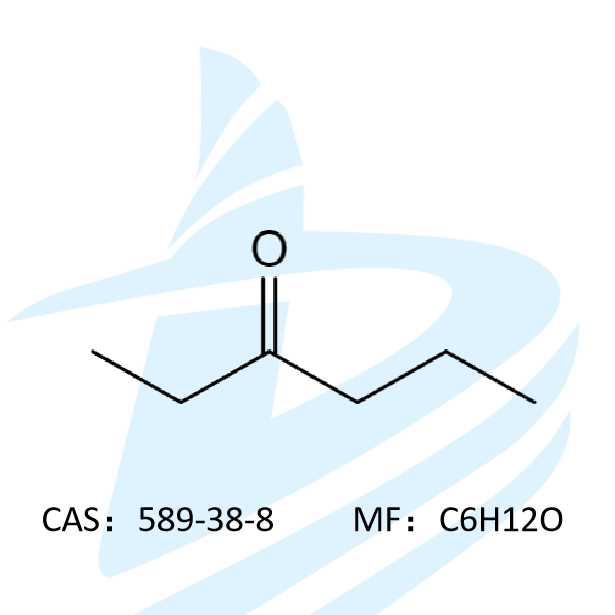
One of the first steps in identifying 3 - hexanone is to examine its physical properties. 3 - hexanone, with the molecular formula (C_{6}H_{12}O), is a colorless liquid with a characteristic sweet, fruity odor. It has a boiling point of approximately 125 - 126°C and a density of about 0.811 g/mL at 25°C.
In comparison, 4 - heptanone, which also belongs to the ketone family, has a different molecular structure ((C_{7}H_{14}O)). It has a higher boiling point, around 144 - 145°C, and a slightly higher density of about 0.821 g/mL at 25°C. These differences in boiling points and densities can be used as initial indicators to differentiate between the two compounds.
Another compound that might be confused with 3 - hexanone is N - Valeric Acid ((C_{5}H_{10}O_{2})). N - Valeric Acid is an organic acid with a pungent, unpleasant odor, which is very distinct from the sweet smell of 3 - hexanone. Additionally, N - Valeric Acid has a melting point of - 34°C and a boiling point of 186 - 187°C, which are significantly different from those of 3 - hexanone.
Spectroscopic Analysis
Spectroscopic techniques are powerful tools for identifying chemical compounds. Let's take a look at how different spectroscopic methods can be used to distinguish 3 - hexanone from similar compounds.
Infrared (IR) Spectroscopy
IR spectroscopy measures the absorption of infrared radiation by a compound. Each functional group in a molecule has characteristic absorption frequencies. In the case of 3 - hexanone, the carbonyl group ((C = O)) has a strong absorption peak around 1715 - 1725 (cm^{-1}). Other ketones, such as 4 - heptanone, will also have a carbonyl absorption peak in a similar range, but the overall IR spectrum will differ due to the different carbon - chain lengths and other functional groups present in the molecule.
N - Valeric Acid, on the other hand, will show an absorption peak for the carboxylic acid group ((O - H) stretch) around 2500 - 3300 (cm^{-1}) in addition to the carbonyl peak (around 1700 - 1720 (cm^{-1})). This additional peak can be used to distinguish it from 3 - hexanone.
Nuclear Magnetic Resonance (NMR) Spectroscopy
NMR spectroscopy provides information about the structure and environment of atoms in a molecule. For 3 - hexanone, the proton NMR ((^{1}H) NMR) spectrum will show characteristic signals for the different types of protons in the molecule. The protons adjacent to the carbonyl group will have a chemical shift in the range of 2 - 3 ppm.
In the (^{1}H) NMR spectrum of 4 - heptanone, the chemical shifts will be similar but will also reflect the different carbon - chain length. The additional carbon atoms in 4 - heptanone will result in more complex splitting patterns and different chemical shifts for some of the protons.
N - Valeric Acid will have a very different (^{1}H) NMR spectrum compared to 3 - hexanone. The carboxylic acid proton will have a chemical shift in the range of 10 - 13 ppm, which is a distinct feature not present in the spectrum of 3 - hexanone.
Mass Spectrometry (MS)
Mass spectrometry measures the mass - to - charge ratio ((m/z)) of ions in a sample. The mass spectrum of 3 - hexanone will show a molecular ion peak ((M^{+})) at (m/z = 100) (corresponding to the molecular weight of (C_{6}H_{12}O)). Fragmentation patterns in the mass spectrum can also provide valuable information about the structure of the molecule.
4 - heptanone will have a molecular ion peak at (m/z = 114) ((C_{7}H_{14}O)), and its fragmentation pattern will be different from that of 3 - hexanone. N - Valeric Acid will have a molecular ion peak at (m/z = 102) ((C_{5}H_{10}O_{2})), and its fragmentation pattern will also be distinct, allowing for easy differentiation.
Chemical Reactions
Chemical reactions can also be used to distinguish 3 - hexanone from other compounds.
Reaction with 2,4 - Dinitrophenylhydrazine (2,4 - DNP)
Both 3 - hexanone and 4 - heptanone are ketones and will react with 2,4 - DNP to form yellow or orange precipitates of 2,4 - dinitrophenylhydrazones. However, the melting points of these derivatives can be used to distinguish between the two compounds. The 2,4 - dinitrophenylhydrazone derivative of 3 - hexanone will have a different melting point compared to that of 4 - heptanone.
N - Valeric Acid, being an acid, will not react with 2,4 - DNP in the same way as ketones. This reaction can be used as a quick test to rule out N - Valeric Acid when trying to identify 3 - hexanone.
Oxidation Reactions
Ketones like 3 - hexanone and 4 - heptanone are relatively resistant to oxidation under mild conditions. However, N - Valeric Acid can be oxidized to form carbon dioxide and water under appropriate oxidation conditions. This difference in reactivity can be used to distinguish N - Valeric Acid from 3 - hexanone.
Chromatographic Separation
Chromatographic techniques, such as gas chromatography (GC) and high - performance liquid chromatography (HPLC), can be used to separate and identify 3 - hexanone from other compounds.

In GC, the sample is vaporized and passed through a column packed with a stationary phase. Different compounds will have different retention times based on their volatility and interaction with the stationary phase. 3 - hexanone and 4 - heptanone will have different retention times due to their different boiling points and chemical properties.
HPLC can also be used to separate and analyze 3 - hexanone and other compounds. The separation is based on the interaction of the compounds with a liquid mobile phase and a solid stationary phase. By comparing the retention times of known standards with the sample, it is possible to identify 3 - hexanone in a mixture.
Conclusion
Identifying 3 - hexanone from other similar compounds requires a combination of physical property analysis, spectroscopic techniques, chemical reactions, and chromatographic separation. By carefully examining the boiling points, densities, odors, and other physical properties, and using powerful spectroscopic methods such as IR, NMR, and MS, as well as chemical reactions and chromatographic techniques, it is possible to accurately distinguish 3 - hexanone from compounds like 4 - heptanone and N - Valeric Acid.
As a 3 - hexanone supplier, I am committed to providing high - quality products and accurate information. If you are interested in purchasing 3 - hexanone or have any questions about its identification or applications, please feel free to contact us for further discussion and procurement negotiation.
References
- Silverstein, R. M., Webster, F. X., & Kiemle, D. J. (2014). Spectrometric Identification of Organic Compounds. Wiley.
- McMurry, J. (2016). Organic Chemistry. Cengage Learning.
- Skoog, D. A., West, D. M., Holler, F. J., & Crouch, S. R. (2013). Fundamentals of Analytical Chemistry. Cengage Learning.




