Hey there! If you're in the business of dealing with pyridine derivatives or just a curious chemist, you're in the right place. As a 2-Chloropyridine supplier, I've got a ton of insights on how to prepare its derivatives. Let's dive right in!
Understanding 2 - Chloropyridine
First off, 2-Chloropyridine is a pretty important compound in the world of chemistry. It's used in a bunch of different industries, like pharmaceuticals, agrochemicals, and materials science. Its structure gives it some unique chemical properties that make it a great starting point for creating other useful compounds.
General Approaches for Derivative Preparation
There are several ways to prepare derivatives of 2 - Chloropyridine. One of the most common methods is through substitution reactions. You see, the chlorine atom in 2 - Chloropyridine is relatively reactive, which means it can be replaced by other functional groups.
Nucleophilic Substitution
Nucleophilic substitution is a classic way to go. You can use different nucleophiles to replace the chlorine atom. For example, if you use an amine as a nucleophile, you can get an amino - substituted pyridine derivative. The reaction usually takes place in a suitable solvent, like dimethylformamide (DMF) or dimethyl sulfoxide (DMSO). You need to heat the reaction mixture to speed up the process.
Let's say you want to make a 2 - aminopyridine derivative. You'd mix 2 - Chloropyridine with an excess of the amine in DMF and heat it under reflux. The chlorine atom will be replaced by the amino group, and you'll end up with your desired derivative. It's important to control the reaction conditions, like temperature and reaction time, to get a good yield.
Metal - Catalyzed Reactions
Metal - catalyzed reactions are also super useful. Palladium - catalyzed cross - coupling reactions, for instance, can be used to introduce different aryl or alkyl groups onto the pyridine ring. The Suzuki - Miyaura reaction is a popular choice. In this reaction, you react 2 - Chloropyridine with an aryl or alkyl boronic acid in the presence of a palladium catalyst and a base.
The reaction conditions are usually milder compared to some other methods. You can carry out the reaction at room temperature or slightly elevated temperatures in an aqueous or organic solvent. The advantage of this method is that it allows you to introduce a wide variety of functional groups with high selectivity.
Specific Derivatives and Their Preparation
Preparation of Pentachloropyridine
Pentachloropyridine is a highly chlorinated derivative of pyridine. To prepare it from 2 - Chloropyridine, you can use a chlorination reaction. One common approach is to use chlorine gas in the presence of a catalyst, like iron(III) chloride.
You start by dissolving 2 - Chloropyridine in a suitable solvent, like carbon tetrachloride. Then you bubble chlorine gas through the solution while heating it. The reaction is exothermic, so you need to control the temperature carefully. The iron(III) chloride catalyst helps to activate the pyridine ring and promote the chlorination process. As the reaction progresses, more and more chlorine atoms are added to the ring until you get pentachloropyridine.
Preparation of 2,3,5,6 - Tetrachloropyridine
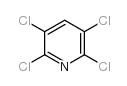
2,3,5,6 - Tetrachloropyridine can be prepared from 2 - Chloropyridine through a step - by - step chlorination process. You can use a combination of different chlorinating agents. For example, you can first use sulfuryl chloride to introduce some additional chlorine atoms.
You mix 2 - Chloropyridine with sulfuryl chloride in an organic solvent, like chloroform. The reaction is usually carried out at a moderate temperature. After the first chlorination step, you can further chlorinate the product using chlorine gas in the presence of a catalyst to get 2,3,5,6 - Tetrachloropyridine.
Factors Affecting the Preparation
There are several factors that can affect the preparation of 2 - Chloropyridine derivatives. One of the most important factors is the purity of the starting material. If your 2 - Chloropyridine has impurities, it can affect the reaction rate and the yield of the derivative. So, it's crucial to use high - quality 2 - Chloropyridine.
The reaction conditions, such as temperature, pressure, and reaction time, also play a big role. Different reactions have different optimal conditions. For example, some reactions might require high temperatures to proceed, while others work better at room temperature. You need to optimize these conditions based on the specific reaction you're carrying out.
The choice of solvent is another important factor. The solvent can affect the solubility of the reactants and the reaction mechanism. Some solvents might be more suitable for certain reactions than others. For example, polar solvents like DMF are good for nucleophilic substitution reactions because they can solvate the ions involved in the reaction.
Tips for a Successful Preparation
- Do your research: Before you start any reaction, make sure you understand the reaction mechanism and the optimal conditions. Look up relevant literature and papers to get an idea of what has worked for others.
- Use proper safety precautions: Many of the chemicals used in these reactions can be hazardous. Wear appropriate protective equipment, like gloves and goggles, and work in a well - ventilated area.
- Monitor the reaction: Use analytical techniques, like thin - layer chromatography (TLC) or high - performance liquid chromatography (HPLC), to monitor the progress of the reaction. This will help you determine when the reaction is complete and make any necessary adjustments.
Conclusion
Preparing derivatives of 2 - Chloropyridine can be a fascinating and rewarding process. With the right methods and techniques, you can create a wide variety of useful compounds. Whether you're in the pharmaceutical industry looking for new drug candidates or in the agrochemical field developing new pesticides, 2 - Chloropyridine derivatives have a lot to offer.


If you're interested in purchasing high - quality 2 - Chloropyridine for your derivative preparation needs, feel free to reach out. We're here to provide you with the best products and support for your chemical projects. Let's start a great business relationship and explore the world of pyridine derivatives together!
References
- March, J. (1992). Advanced Organic Chemistry: Reactions, Mechanisms, and Structure. Wiley.
- Larock, R. C. (1989). Comprehensive Organic Transformations: A Guide to Functional Group Preparations. VCH Publishers.