Hey there! As a supplier of 4 - heptanone, I often get asked whether 4 - heptanone is a polar or non - polar compound. It's a pretty common question, especially among those in the chemical industry, and today I'm gonna break it down for you.
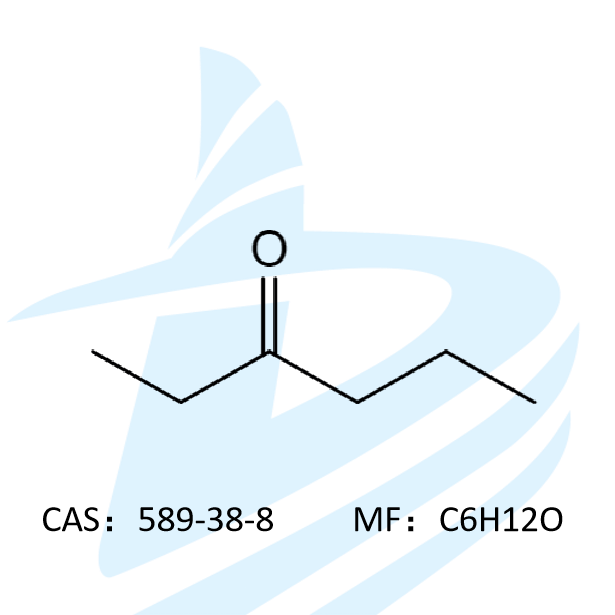
Let's start with the basics. What exactly is 4 - heptanone? Well, it's a ketone with the molecular formula C₇H₁₄O. Ketones are a class of organic compounds that have a carbonyl group (C = O) bonded to two carbon atoms. In the case of 4 - heptanone, the carbonyl group is located at the fourth carbon atom in a seven - carbon chain.
Now, to figure out if it's polar or non - polar, we need to understand what makes a compound polar. A polar compound has a separation of electric charge, which means there's a positive end and a negative end. This usually happens when there's a significant difference in electronegativity between the atoms in a molecule. Electronegativity is the ability of an atom to attract electrons towards itself in a chemical bond.
In the carbonyl group of 4 - heptanone, the oxygen atom is much more electronegative than the carbon atom. Oxygen has an electronegativity of about 3.44, while carbon has an electronegativity of about 2.55. This difference in electronegativity causes the oxygen atom to pull the shared electrons in the C = O bond towards itself, creating a partial negative charge (δ⁻) on the oxygen and a partial positive charge (δ⁺) on the carbon.
This separation of charge in the carbonyl group makes it a polar bond. And since the carbonyl group is part of the 4 - heptanone molecule, the whole molecule has a polar region. However, 4 - heptanone also has a non - polar part, which is the hydrocarbon chain. Hydrocarbon chains are made up of carbon - carbon and carbon - hydrogen bonds, and the electronegativity difference between carbon and hydrogen is relatively small (about 0.35). So, these bonds are considered non - polar.
Overall, 4 - heptanone is a polar compound, but it has both polar and non - polar characteristics. The polar carbonyl group gives it some solubility in polar solvents like water, although it's not highly soluble because of the relatively large non - polar hydrocarbon chain. It's more soluble in less polar solvents such as ethanol or acetone.
Now, let's talk about some related compounds. You might be familiar with N - Valeric Acid. N - Valeric acid is also an organic compound, but it's a carboxylic acid. Carboxylic acids have a carboxyl group (- COOH), which is even more polar than the carbonyl group in 4 - heptanone. The presence of the hydroxyl group (- OH) in the carboxyl group increases the polarity of the molecule, making it more soluble in water compared to 4 - heptanone.
Another related compound is 2 - Heptanone. Like 4 - heptanone, 2 - heptanone is a ketone. The main difference is the position of the carbonyl group. In 2 - heptanone, the carbonyl group is at the second carbon atom in the seven - carbon chain. This difference in the position of the carbonyl group can affect the physical and chemical properties of the compound, but both 2 - heptanone and 4 - heptanone are polar due to the presence of the carbonyl group.
3 - hexanone is yet another ketone. It has a six - carbon chain with the carbonyl group at the third carbon atom. Similar to 4 - heptanone, it has a polar carbonyl group and a non - polar hydrocarbon chain, making it a polar compound.

So, why does it matter whether 4 - heptanone is polar or non - polar? Well, this property affects its solubility, reactivity, and how it interacts with other substances. In industrial applications, understanding the polarity of 4 - heptanone is crucial for processes such as extraction, synthesis, and formulation. For example, if you're using 4 - heptanone as a solvent, its polarity will determine what other compounds it can dissolve.
As a supplier of 4 - heptanone, I know that different industries have different requirements for this compound. Some might need it for its solvent properties, while others might use it as an intermediate in chemical synthesis. That's why I offer high - quality 4 - heptanone that meets the strictest standards. Whether you're in the pharmaceutical, fragrance, or paint industry, 4 - heptanone can be a valuable addition to your processes.
If you're interested in purchasing 4 - heptanone or have any questions about its properties and applications, don't hesitate to reach out. I'm here to help you find the best solution for your needs. We can discuss the quantity, quality, and pricing, and I'm confident that we can work out a deal that suits you.
In conclusion, 4 - heptanone is a polar compound with both polar and non - polar features. Its polarity is mainly due to the carbonyl group, which gives it unique properties that make it useful in various industries. If you're looking for a reliable supplier of 4 - heptanone, I'm here to assist you. Let's start a conversation and see how we can work together to meet your chemical needs.
References
- Atkins, P., & de Paula, J. (2006). Physical Chemistry. Oxford University Press.
- McMurry, J. (2012). Organic Chemistry. Brooks/Cole Cengage Learning.