As a supplier of 2 - Pentanone, I am often asked about the spectral characteristics of this compound in the UV - Vis range. Understanding these spectral features is crucial not only for academic research but also for various industrial applications. In this blog, I will delve into the details of the UV - Vis spectral characteristics of 2 - Pentanone, exploring its underlying principles, practical implications, and how it compares with other related compounds.
The Basics of UV - Vis Spectroscopy
UV - Vis spectroscopy is a widely used analytical technique that measures the absorption of ultraviolet (UV) and visible (Vis) light by a sample. The absorption of light in this range is related to electronic transitions within the molecule. When a molecule absorbs a photon of light, an electron is promoted from a lower - energy orbital to a higher - energy orbital. The energy of the absorbed photon corresponds to the energy difference between these two orbitals.
The UV - Vis spectrum is typically presented as a plot of absorbance (A) versus wavelength (λ). The absorbance is related to the concentration of the sample (c), the path length of the light through the sample (l), and the molar absorptivity (ε) by the Beer - Lambert law: (A=\varepsilon cl).
Spectral Characteristics of 2 - Pentanone in UV - Vis
2 - Pentanone, with the chemical formula (C_{5}H_{10}O), is a ketone. Ketones generally exhibit characteristic absorption bands in the UV - Vis region due to the presence of the carbonyl group ((C = O)). The carbonyl group has a π - bond and non - bonding electrons on the oxygen atom. The main electronic transitions responsible for the UV - Vis absorption in ketones are the (n\rightarrow\pi^{}) and (\pi\rightarrow\pi^{}) transitions.
(n\rightarrow\pi^{*}) Transition
The (n\rightarrow\pi^{}) transition involves the promotion of a non - bonding electron (n) on the oxygen atom of the carbonyl group to the antibonding π - orbital ((\pi^{})) of the (C = O) bond. This transition typically occurs in the near - UV region, around 270 - 300 nm. For 2 - Pentanone, the (n\rightarrow\pi^{*}) absorption band is relatively weak, with a low molar absorptivity ((\varepsilon) values are usually in the range of 10 - 100 (L\ mol^{-1}\ cm^{-1})). The low intensity is due to the fact that this transition is spin - forbidden, meaning that the spin of the electron must change during the transition, which is a relatively improbable event.
(\pi\rightarrow\pi^{*}) Transition
The (\pi\rightarrow\pi^{}) transition involves the promotion of an electron from the bonding π - orbital to the antibonding π - orbital of the (C = O) bond. This transition occurs at shorter wavelengths, typically in the far - UV region (below 200 nm). In the case of 2 - Pentanone, the (\pi\rightarrow\pi^{}) absorption is more intense than the (n\rightarrow\pi^{*}) absorption, with higher molar absorptivity values. However, the far - UV region is often difficult to access experimentally due to the strong absorption of air and many solvents in this range.
Factors Affecting the UV - Vis Spectrum of 2 - Pentanone
Several factors can influence the UV - Vis spectrum of 2 - Pentanone:
Solvent Effects
The choice of solvent can have a significant impact on the position and intensity of the absorption bands. Polar solvents can interact with the carbonyl group of 2 - Pentanone through dipole - dipole interactions or hydrogen bonding. For the (n\rightarrow\pi^{}) transition, polar solvents tend to shift the absorption band to shorter wavelengths (blue - shift). This is because the polar solvent stabilizes the non - bonding electrons on the oxygen atom more than the excited - state (\pi^{}) orbital.
Temperature
Temperature can also affect the UV - Vis spectrum. As the temperature increases, the absorption bands may broaden due to increased molecular motion and a greater distribution of molecular conformations. In addition, changes in temperature can also affect the solvent properties, which in turn can influence the spectral characteristics.
Concentration
According to the Beer - Lambert law, the absorbance is directly proportional to the concentration of the sample. However, at high concentrations, deviations from the Beer - Lambert law may occur due to factors such as molecular interactions and self - association.
Comparison with Related Compounds
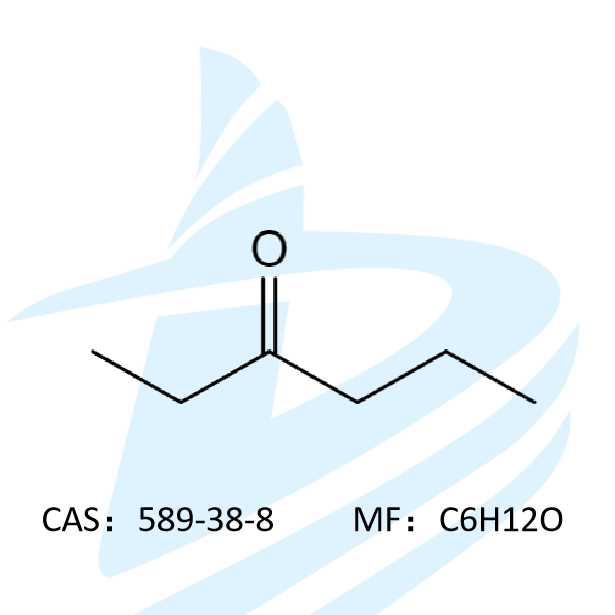
It is interesting to compare the UV - Vis spectral characteristics of 2 - Pentanone with other related compounds. For example, 3 - hexanone, which is also a ketone but with a longer carbon chain. The general spectral features are similar, with both compounds showing (n\rightarrow\pi^{}) and (\pi\rightarrow\pi^{}) transitions. However, the position and intensity of the absorption bands may differ slightly due to the differences in the molecular structure and the electronic environment of the carbonyl group.
Another related compound is N - Valeric Acid. Although it also contains a carbonyl group, the presence of the hydroxyl group in the carboxylic acid functional group changes the electronic structure significantly. The (n\rightarrow\pi^{*}) transition in N - Valeric Acid may occur at a different wavelength and with a different intensity compared to 2 - Pentanone.
Pinacolone is a more sterically hindered ketone. The steric effects can influence the electronic transitions and the interaction with solvents, leading to differences in the UV - Vis spectrum compared to 2 - Pentanone.
Practical Applications
The UV - Vis spectral characteristics of 2 - Pentanone have several practical applications:
Analytical Chemistry
UV - Vis spectroscopy can be used for the quantitative analysis of 2 - Pentanone in a sample. By measuring the absorbance at the characteristic wavelength of the (n\rightarrow\pi^{*}) transition and using the Beer - Lambert law, the concentration of 2 - Pentanone can be determined. This is useful in quality control in the production of 2 - Pentanone and in the analysis of environmental samples.
Reaction Monitoring
In chemical reactions involving 2 - Pentanone, UV - Vis spectroscopy can be used to monitor the progress of the reaction. For example, if a reaction involves the conversion of the carbonyl group in 2 - Pentanone, the changes in the UV - Vis spectrum can provide information about the reaction kinetics and the formation of reaction products.

Conclusion
In conclusion, the UV - Vis spectral characteristics of 2 - Pentanone are mainly determined by the (n\rightarrow\pi^{}) and (\pi\rightarrow\pi^{}) transitions of the carbonyl group. These transitions occur in the near - UV and far - UV regions, respectively, and are influenced by factors such as solvent, temperature, and concentration. Comparing with related compounds, we can see that the molecular structure plays an important role in determining the spectral features.
As a supplier of 2 - Pentanone, I understand the importance of these spectral characteristics for our customers in various industries. Whether you are involved in research, production, or quality control, a good understanding of the UV - Vis spectrum of 2 - Pentanone can help you make better use of this compound. If you are interested in purchasing 2 - Pentanone or have any questions about its spectral properties, please feel free to contact us for further discussion and procurement negotiation.
References
- Pavia, D. L., Lampman, G. M., Kriz, G. S., & Engel, R. G. (2014). Introduction to Spectroscopy. Cengage Learning.
- Skoog, D. A., West, D. M., Holler, F. J., & Crouch, S. R. (2013). Fundamentals of Analytical Chemistry. Brooks/Cole.