As a supplier of 2-Pentanone, I've had the privilege of delving deep into the fascinating world of this versatile chemical compound. One area that has always intrigued me is its interaction with metal ions. In this blog post, I'll explore how 2-Pentanone reacts with metal ions, shedding light on the underlying chemical mechanisms and potential applications.
Chemical Structure and Properties of 2-Pentanone
Before we dive into its reactions with metal ions, let's first understand the basic structure and properties of 2-Pentanone. Also known as methyl propyl ketone, 2-Pentanone has the molecular formula C₅H₁₀O. It consists of a five-carbon chain with a ketone functional group (C=O) located at the second carbon atom.
This simple yet significant structure gives 2-Pentanone several unique properties. It is a colorless liquid with a pleasant, sweet odor, similar to that of acetone. It is soluble in many organic solvents but has limited solubility in water. These properties make it a valuable solvent in various industrial applications, including paints, coatings, and adhesives.
Reactivity of 2-Pentanone with Metal Ions
The reactivity of 2-Pentanone with metal ions is primarily due to the presence of the carbonyl group (C=O). The carbonyl oxygen has a partial negative charge, making it a Lewis base, which can donate a pair of electrons to a metal ion, a Lewis acid. This interaction leads to the formation of coordination complexes.
Formation of Coordination Complexes
When 2-Pentanone reacts with metal ions, the oxygen atom of the carbonyl group donates a pair of electrons to the metal ion, forming a coordinate covalent bond. The resulting complex is stabilized by the electrostatic attraction between the positively charged metal ion and the negatively charged oxygen atom.
For example, when 2-Pentanone reacts with copper(II) ions (Cu²⁺), a coordination complex is formed. The carbonyl oxygen of 2-Pentanone coordinates to the copper ion, and the overall charge of the complex depends on the number of 2-Pentanone molecules involved and the counterions present.
Influence of Metal Ion Characteristics
The nature of the metal ion plays a crucial role in determining the outcome of the reaction with 2-Pentanone. Factors such as the charge, size, and electronic configuration of the metal ion can significantly affect the stability and structure of the resulting coordination complex.
- Charge: Metal ions with higher charges have a greater electrostatic attraction for the carbonyl oxygen of 2-Pentanone, leading to more stable complexes. For instance, trivalent metal ions like iron(III) (Fe³⁺) form stronger complexes with 2-Pentanone compared to divalent metal ions like zinc(II) (Zn²⁺).
- Size: Smaller metal ions can approach the carbonyl oxygen more closely, resulting in stronger coordinate covalent bonds. For example, lithium ions (Li⁺) are smaller than sodium ions (Na⁺), and 2-Pentanone forms more stable complexes with Li⁺ due to the closer proximity of the metal ion to the carbonyl oxygen.
- Electronic Configuration: The electronic configuration of the metal ion can also influence the reactivity with 2-Pentanone. Transition metal ions with partially filled d-orbitals can participate in additional interactions, such as π-backbonding, which can further stabilize the coordination complex.
Reaction Conditions
The reaction conditions, such as temperature, solvent, and pH, can also affect the reaction between 2-Pentanone and metal ions.

- Temperature: Higher temperatures generally increase the rate of reaction by providing more energy for the molecules to overcome the activation energy barrier. However, excessive heat can also lead to the decomposition of the resulting coordination complex.
- Solvent: The choice of solvent can influence the solubility of the metal ion and 2-Pentanone, as well as the stability of the coordination complex. Polar solvents, such as water and alcohols, can solvate the metal ions and 2-Pentanone, facilitating the reaction. Nonpolar solvents, on the other hand, may limit the solubility of the metal ions and reduce the reaction rate.
- pH: The pH of the reaction medium can affect the charge state of the metal ion and 2-Pentanone. In acidic solutions, the carbonyl group of 2-Pentanone may be protonated, reducing its ability to coordinate with metal ions. In basic solutions, the metal ion may form hydroxide complexes, which can compete with 2-Pentanone for coordination.
Applications of 2-Pentanone-Metal Ion Complexes
The formation of 2-Pentanone-metal ion complexes has several practical applications in various fields.
Catalysis
2-Pentanone-metal ion complexes can act as catalysts in chemical reactions. The metal ion in the complex can activate substrates by coordinating to them, facilitating chemical transformations. For example, some 2-Pentanone-copper complexes have been shown to catalyze the oxidation of alcohols to aldehydes or ketones.
Analytical Chemistry
The formation of 2-Pentanone-metal ion complexes can be used in analytical chemistry for the detection and quantification of metal ions. The color and spectroscopic properties of the complexes can be used to identify and measure the concentration of metal ions in a sample. For instance, the formation of a colored complex between 2-Pentanone and a specific metal ion can be detected using UV-Vis spectroscopy.
Materials Science
2-Pentanone-metal ion complexes can be used in the synthesis of advanced materials. The complexes can serve as precursors for the preparation of metal nanoparticles or thin films. By controlling the reaction conditions and the composition of the complex, materials with specific properties can be obtained.
Related Compounds and Their Reactivity with Metal Ions
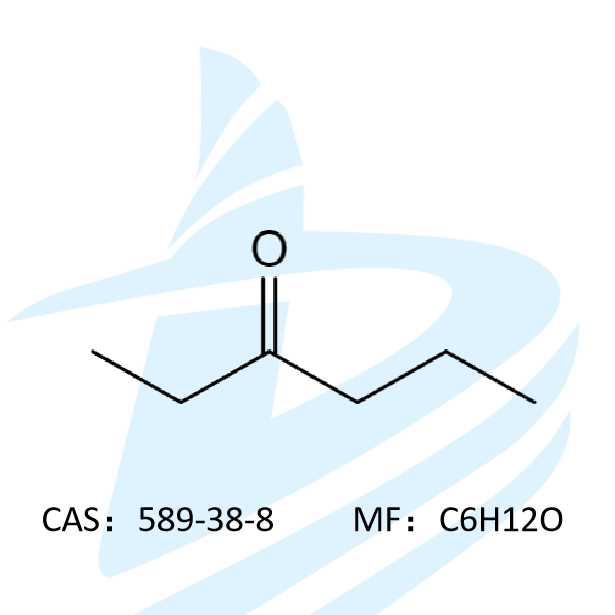
In addition to 2-Pentanone, other related compounds also exhibit reactivity with metal ions. For example, N-Valeric Acid, 3-hexanone, and 4-heptanone have similar carbonyl-containing structures and can form coordination complexes with metal ions.
The reactivity of these compounds with metal ions is influenced by factors similar to those affecting 2-Pentanone, such as the nature of the metal ion, reaction conditions, and the structure of the compound. However, the specific properties and applications of the resulting complexes may vary depending on the structure of the compound.
Conclusion
In conclusion, the reaction of 2-Pentanone with metal ions is a fascinating area of chemistry with numerous potential applications. The formation of coordination complexes between 2-Pentanone and metal ions is driven by the Lewis acid-base interaction between the carbonyl oxygen of 2-Pentanone and the metal ion. The nature of the metal ion, reaction conditions, and the structure of 2-Pentanone all play important roles in determining the outcome of the reaction.
As a supplier of 2-Pentanone, I am committed to providing high-quality products to meet the diverse needs of our customers. Whether you are interested in exploring the reactivity of 2-Pentanone with metal ions for research purposes or in need of 2-Pentanone for industrial applications, I invite you to contact us to discuss your requirements and explore potential business opportunities.
References
- Atkins, P. W., & de Paula, J. (2014). Physical Chemistry for the Life Sciences. Oxford University Press.
- Housecroft, C. E., & Sharpe, A. G. (2012). Inorganic Chemistry. Pearson Education.
- Carey, F. A., & Giuliano, R. M. (2014). Organic Chemistry. McGraw-Hill Education.