




Benzyl Acetate
Why Choose Us?
Rich Experience
HANGZHOU BETTER CHEMTECH LTD is a comprehensive chemical company specializing in Chemical Production, Management, Application Development and Brand Promotion. BETTER CHEMTECH currently has two independent sub-brands: Chemintel and Eubiotics.
Professional Team
Our company has a team of highly experienced professionals in both China and India. Under the environmental protection problems faced by the industry, we strive to ensure a stable supply of products, and provide customers with the best supply chain solutions.
Quality Control
As a reliable supplier with many years of professional experiences in the chemical industry, product quality is our primary consideration. We will provide sample testing and confirm the specifications to ensure your satisfactory of the finally shipment goods.
Application of the Product
Our products have application in the fields of pharmaceuticals & fine chemicals, pesticides, dyes, flavors and fragrances, feed additives, green fibers & others.
Benzyl acetate is an organic ester with the molecular formula CH 3C(O)OCH 2C 6H 5. It is formed by the condensation of benzyl alcohol and acetic acid. Except where otherwise noted, data are given for materials in their standard state (at 25 °C [77 °F], 100 kPa).


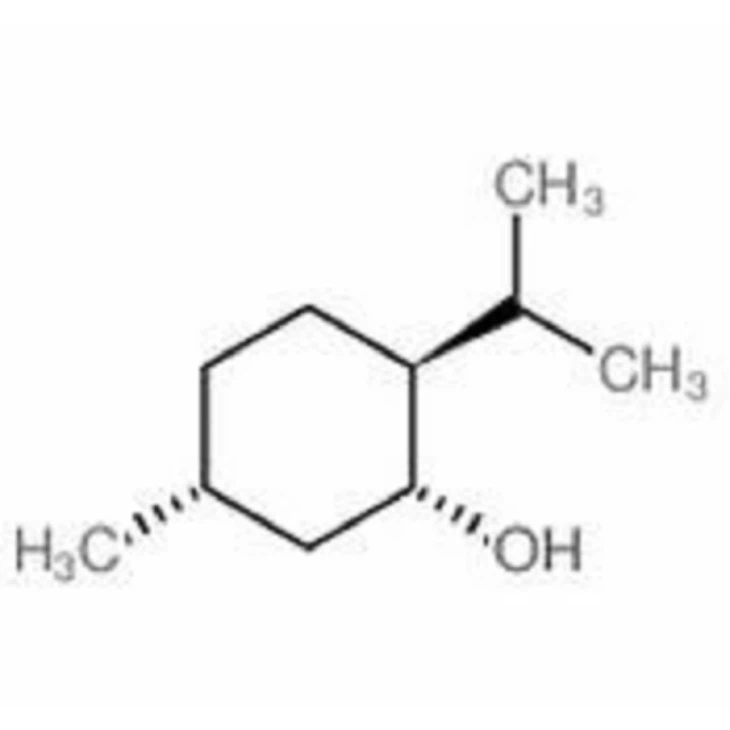
L-Menthol 2216-51-5 CAS NO: 2216-51-5 HS CODE: Formula: C10H20O Molecular Weight: 156.26500.

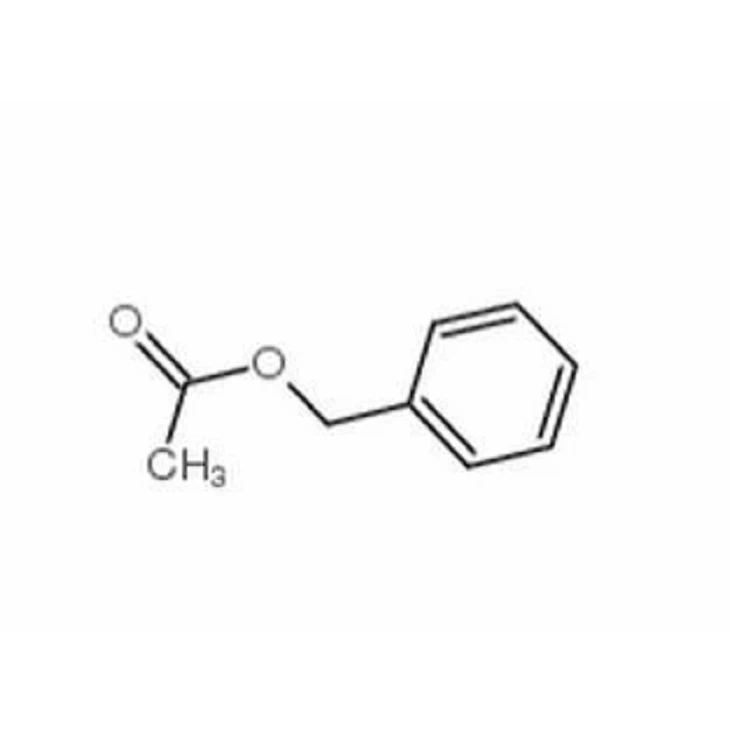
Benzyl acetate is an organic compound. Benzyl acetate is found naturally in many flowers. It is the primary constituent of the essential oils from the flowers jasmine, ylang-ylang and tobira
How to Use Benzyl Acetate
While benzyl acetate is mainly used in flavor and fragrance industry, benzyl alcohol is widely used as solvent for inks, paints, coatings, and as intermediate in chemical industry. This high demand underlines the importance of an environmentally benign alternative to the established process.
For this purpose, some efforts were made to develop catalysts for the acetoxylation of toluene to benzyl acetate. Titania supported Pd material were found to be best catalysts. One of the first insights was the necessity to use an additional component next to the active species Pd in order to obtain an active catalyst.
In fact, the supported one component system Pd showed only a poor activity with less than 5%, but adding the additional component Sb enhanced the activity by a factor of 16. The catalysts were prepared in a two-step impregnation from PdCl2 and Sb2O3.
To obtain an active system, an induction period of several hours is necessary. Unfortunately, after reaching maximum activity the system deactivates, which mean activity declines.

What Is the Flavor of Benzyl Acetate
Benzyl Acetate is sweet floral fruity fresh aromatic jasmine ylang powerful thin gardenia muguet lily flowers tuberose lily-of-the-valley violet melon watermelon (musk) strawberry apple apricot banana butter cherry.
Applications of Benzyl Acetate
Benzyl acetate is a widely used compound in everyday products due to its pleasant, fruity fragrance reminiscent of jasmine or cherry blossoms. Its versatile nature makes it a popular choice for various applications:
Perfumes and Fragrances: Benzyl acetate is a key ingredient in perfumes and fragrances, imparting a long-lasting floral scent. Its sweet aroma enhances the overall olfactory experience, making it a favorite among perfume manufacturers.
Air Fresheners: In air fresheners and room sprays, benzyl acetate acts as a fragrance enhancer, masking unpleasant odors and leaving behind a fresh, inviting scent. Its ability to linger in the air makes it ideal for creating a pleasant atmosphere in homes and commercial spaces.
Household Cleaners: Benzyl acetate is often incorporated into household cleaners such as surface sprays and detergents to add a subtle floral fragrance. This helps to neutralize harsh chemical odors, making cleaning routines more enjoyable.
Flavorings: In the food industry, benzyl acetate is used as a flavoring agent in confectionery, beverages, and baked goods. Its fruity taste enhances the sensory appeal of products such as candies, soft drinks, and pastries, contributing to their overall flavor profile.
Benzyl acetate is an aromatic ester that has attracted attention for its scent that is similar to jasmine, gardenia, and lily of the valley. It is commonly used as a base fragrance ingredient in perfumes, cosmetics, and soap fragrances, it is also one of the largest varieties in the synthetic fragrance industry.
Benzyl acetate is mainly produced via chemical synthesis. Among chemical synthesis methods, the esterification reaction of acetic acid and benzyl alcohol (BALC) is the most commonly used. As a precursor, BALC is conventionally produced and commercially prepared from petroleum. This process involves benzyl chloride via alkaline hydrolysis. In addition to harsh reaction conditions, non-renewable feedstocks are used in this process, thus posing sustainability issues.
How Is Benzyl Acetate Manufactured
For industrial production of benzyl acetate, a process is known in which benzyl chloride produced by chlorination of toluene is hydrolyzed by alkali, and the resulting benzyl alcohol is esterified with acetic acid. This process comprises multistage reactions, and includes many steps of separation and purification after the respective reactions. Therefore, the process is complex and is not advantageous economically. Moreover, in the hydrolysis reaction of the second step, an alkali such as sodium hydroxide is required in an equivalent amount or more, and a large amount of a salt containing organic compounds is formed as the by-product, which involves problems in after-treatment thereof.
In a process not industrially conducted, benzyl acetate is produced by reaction of toluene, acetic acid, and oxygen in the presence of a catalyst for oxyacetoxylation. This process produces benzyl acetate in one step reaction without formation of a by-product salt, so that it is advantageous economically and can be of low environmental load.
On the other hand, benzyl alcohol can be produced by the known processes below. Of these, the processes (1) and (3) are practiced industrially:
(1) Hydrolysis of benzyl chloride by sodium hydroxide.
(2) Hydrolysis of benzyl acetate in the presence of a catalyst.
(3) Reduction of benzaldehyde by hydrogen in the presence of a catalyst.
The above processes (1) and (2) both produces benzyl alcohol by hydrolysis. The process (1) consumes an equivalent amount or more of sodium hydroxide for stoichiometric reaction of benzyl chloride, involving a problem of after-treatment of a large amount of an aqueous solution of organic compound-containing sodium chloride formed as a by-product. The process (3) employs relatively expensive benzaldehyde as the starting material, and is disadvantageous economically.
The process (2) of hydrolysis of benzyl acetate to produce benzyl alcohol forms useful acetic acid as the by-product without discharging waste water, thus being economical and of low environmental load.
However, in this process, the catalyst activity is low, and an extremely large amount of water is required, so that the starting material concentration is lowered. Therefore, this process is not industrially advantageous in consideration of the energy for removal of unreacted water from the liquid reaction mixture.
- Formula: C9H10O2 / CH3COOCH2C6H5
- Molecular mass: 150.2
- Boiling point: 212°C
- Melting point: -51°C
- Relative density (water = 1): 1.1
Solubility in water at 20°C: None
Vapour pressure, Pa at 25°C: 190
Relative vapour density (air = 1): 5.1
Relative density of the vapour/air-mixture at 20°C (air = 1): 1.01
Flash point: 90°C c.c.
Auto-ignition temperature: 460°C
Explosive limits, vol% in air: 0.9-8.4
Octanol/water partition coefficient as log Pow: 1.96
Benzyl acetate is polar covalent molecule as it has multiple polar bonds which are arranged in such a way that the dipole moments are not canceled. The benzyl part is non-polar but the − C − O − C − and bonds are polar due to which the molecule is polar.
Since naphthalene is the most non-polar molecule, it would be the compound that would travel the farthest.
This would have the largest RF value, and would be at the top of the TLC plate. The next molecule would be the ester, phenyl acetate which is slightly polar. The molecule that would be at the bottom is the most polar, which is butyric acid. The most polar molecule will adsorb into the TLC plate, move the slowest, and move the overall shortest distance. This would be at the bottom of the TLC plate.
What Makes up Benzyl Acetate
Benzyl acetate is an organic ester with the molecular formula CH3C(O)OCH2C6H5. It is formed by the condensation of benzyl alcohol and acetic acid.
Similar to most other esters, it possesses a sweet and pleasant aroma, owing to which, it finds applications in personal hygiene and health care products. It is a constituent of jasmin and of the essential oils of ylang-ylang and neroli. It has pleasant sweet aroma reminiscent of jasmine. Further as a flavoring agent it is also used to impart jasmine or apple flavors to various cosmetics and personal care products like lotions, hair creams etc.
It is one of many compounds that is attractive to males of various species of orchid bees. It is collected and used by the bees as an intra-specific pheromone; In apiculture benzyl acetate is used as a bait to collect bees. Natural sources of benzyl acetate include varieties of flowers like jasmine (Jasminum), and fruits like pear, apple, etc.
What Is the UV Spectrum of Benzyl Acetate
The rate constant for the vapor-phase reaction of benzyl acetate with photochemically-produced hydroxyl radicals has been estimated as 6.4X10⁻¹² cu cm/molecule-sec at 25 °C(SRC) using a structure estimation method.
This corresponds to an atmospheric half-life of about 2.5 days at an atmospheric concentration of 5X10+5 hydroxyl radicals per cu cm(1,SRC). A hydrolysis half-life of 38 days at 25 °C and pH 7 was calculated for benzyl acetate from an estimated pseudo-first-order hydrolysis rate constant of 2.1X10⁻⁷/s. The UV spectrum of benzyl acetate in methanol indicates no absorption above 290 nm, suggesting this compound is not expected to directly photolyze. Photolysis of benzyl acetate in t-butanol with 1.3 mol/l acetone added as a sensitizer at 300 nm produced (quantum yields) t-butyl benzyl ether (<0.01) and bibenzyl (<0.01).
The rate constant for the reaction of benzyl acetate with peroxy radicals in water at 30 °C was determined to be 2.3 L/mol s. This value corresponds to an estimated half-life of 9.6 years(SRC) at an aqueous peroxy radical concentration of 1X10⁻⁹ mol/l.
Our Factory
HANGZHOU BETTER CHEMTECH LTD is a comprehensive chemical company specializing in Chemical Production, Management, Application Development and Brand Promotion. Our headquarters is in Hangzhou, China, with service centers in Mumbai, India, and we also have cooperative production bases in China and India.
China's chemical industries are large in scale, but fall short in terms of technical knowhow. In the face of increasingly stringent requirements of the state and the people for the environment and safety production in China, chemical industries are facing large-scale supply shortages. The global chemical supply chain is facing severe challenges in many subdivisions. The chemical industry workforce has lost confidence in the future development of the industry, but BETTER believes that the reconstruction of chemical supply and value chain can lead to the overall development of the industry and the workforce.


FAQ
Hot Tags: benzyl acetate, China benzyl acetate manufacturers, suppliers, factory, ylang ylang scent, jasmine extract, iris fragrance, pine fragrance, floral fragrances, linen scents
Previous
DiphenylmethaneNext
THYMOLYou Might Also Like

Send Inquiry