




Sodium Benzoate
Why Choose Us?
Rich Experience
HANGZHOU BETTER CHEMTECH LTD is a comprehensive chemical company specializing in Chemical Production, Management, Application Development and Brand Promotion. BETTER CHEMTECH currently has two independent sub-brands: Chemintel and Eubiotics.
Professional Team
Our company has a team of highly experienced professionals in both China and India. Under the environmental protection problems faced by the industry, we strive to ensure a stable supply of products, and provide customers with the best supply chain solutions.
Quality Control
As a reliable supplier with many years of professional experiences in the chemical industry, product quality is our primary consideration. We will provide sample testing and confirm the specifications to ensure your satisfactory of the finally shipment goods.
Application of the Product
Our products have application in the fields of pharmaceuticals & fine chemicals, pesticides, dyes, flavors and fragrances, feed additives, green fibers & others.
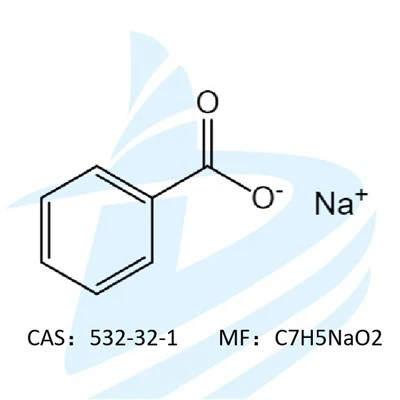
Sodium benzoate also known as benzoate of soda is the sodium salt of benzoic acid, widely used as a food preservative and a pickling agent. It appears as a white crystalline chemical with the formula C6H5COONa.
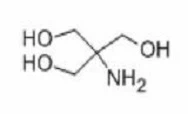
Tris (Hydroxymethyl) Aminomethane
Tris or Tris(hydroxymethyl)aminomethane or THAM is an organic compound with the formula (HOCH2)3CNH2.


M-Phenylenediamine, also called 1,3-diaminobenzene, is an organic compound with the formula C6H4(NH2)2.


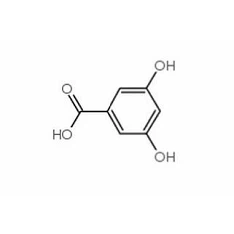
3,5-Dihydroxy benzoic acid, white powder, can be dissolved in ethanol, ether, acetone and hot water.
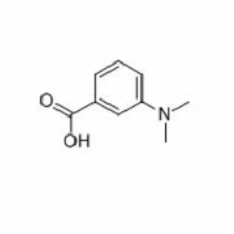
3-Dimethylaminobenzoic Acid is a benzoic acid derivative that is evaluated under biological studies for sirtuin inhibition properties.

It is widely used in the synthesis of organic and organometallic compounds.
Various Uses of Sodium Benzoate in Different Industries
Aside from its use in processed foods and beverages, sodium benzoate is also added to some medicines, cosmetics, personal care products, and industrial products.
● Foods and Beverages
Sodium benzoate is the first preservative the FDA allowed in foods and still a widely used food additive. It's classified as Generally Recognized As Safe (GRAS), meaning that experts consider it safe when used as intended.
It's approved internationally as a food additive and is assigned the identifying number 211.
Sodium benzoate inhibits the growth of potentially harmful bacteria, mold, and other microbes in food, thus deterring spoilage. It's particularly effective in acidic foods.
It's commonly used in foods, such as soda, bottled lemon juice, pickles, jelly, salad dressing, soy sauce, and other condiments.
● Medications
Sodium benzoate is used as a preservative in some over-the-counter and prescription medications, particularly in liquid medicines like cough syrup.
It can be a lubricant in pill manufacturing and makes tablets transparent and smooth, helping them break down rapidly after you swallow them.
Larger amounts of sodium benzoate may be prescribed to treat elevated blood levels of ammonia. Ammonia is a byproduct of protein breakdown, and blood levels may become dangerously high in certain medical conditions.
● Other Uses
Sodium benzoate is commonly used as a preservative in cosmetics and personal care items, such as hair products, baby wipes, toothpaste, and mouthwash.
It also has industrial uses. One of its biggest applications is to deter corrosion, such as in coolants for car engines.
It may be used as a stabilizer in photo processing and to improve the strength of some types of plastic.
Sodium benzoate is generally recognized as safe and can be used as an antimicrobial agent and flavoring agent in food, the maximum allowed amount is 0.1%. It's also generally recognized as safe (GRAS) when used as a preservative in animal feed. If a product contains sodium benzoate, it must be included in the ingredient list.
The FDA considers the maximum allowable level for sodium benzoate in drinking water as 5 parts per billion.
The World Health Organization sets the allowable level for sodium benzoate in products at 0-5 milligrams per kilogram of your body weight per day.
How to Use Sodium Benzoate
Sodium benzoate is not used on its own. You need to use the product formulated with it as per the instructions. There is not much research on the amount of sodium benzoate that is safe and comes down to where it is being used. It does not occur naturally in the human body which is why one is advised to limit the use of products containing sodium benzoate within a small surface area.
Sodium benzoate continues to be one of the most potent preservatives available though there are many alternatives. By choosing the products cautiously, you can strike a balance in the amount of sodium benzoate that goes into your skincare.
Is Sodium Benzoate Same as Vinegar
Vinegar is a dilute solution of acetic acid and is sour. Sodium benzoate is the sodium salt of benzoic acid. Both are preservatives. Vinegar give sour taste to pickles and sodium benzoate gives salty taste.
When sodium benzoate is added to vinegar it increases its efficacy against microorganisms. The active form of sodium benzoate is undissociated benzoic acid. These undissociated molecules enter the cell inactivating the microorganisms. Sodium benzoate is largely used because of its better solubility in water than benzoic acid.
Sodium benzoate dissociates in aqueous media into anions benzoate and cations sodium. At pH 4.2 half of the species is benzoate and half is undissociated benzoic acid. Adding vinegar lowers the pH, and increases the acidity, favoring the formation of undissociated benzoic acid, the active specie.
How Does Sodium Benzoate Benefit Hair
Sodium benzoate as a hair nourishing and growth-promoting ingredient
Although sodium benzoate is mainly employed as a preservative in hair care products to stop bacterial and fungal growth, it is not often thought of as an element that nourishes or encourages hair growth. However, some research points to the possibility that sodium benzoate has antioxidant qualities, which can improve hair health by fending off damage from free radicals. Free radicals are unstable chemicals that can harm cells, including those in hair follicles, by inflicting oxidative stress and damage. Sodium benzoate may also aid in enhancing the effectiveness of other active ingredients in hair care products by enhancing their ability to nourish and stimulate hair growth.
Sodium benzoate and its effects on hair health and repair
Sodium benzoate is commonly used as a preservative in hair care products, but little is known about its precise impact on hair health and restoration. However, sodium benzoate does possess several traits that can indirectly help hair health. For instance, it is thought to possess antibacterial qualities that can aid in preventing bacterial and fungal growth that can cause scalp infections and hair damage. In turn, this may stimulate the growth and restoration of healthy hair.
As a result of sodium benzoate, the pH balance of the scalp and hair may be improved, preserving the hair's natural moisture and avoiding dryness and damage. This can encourage the growth of healthy hair and lessen breakage and split ends. Additionally, some research suggests that sodium benzoate may possess antioxidant qualities that can aid in defending against free radical damage that can result in hair loss and breakage. In turn, this may encourage the growth and restoration of healthy hair.
The potential benefits of sodium benzoate for hair strengthening and texture improvement
Although sodium benzoate is primarily used in hair care products as a preservative to inhibit bacterial and fungal growth, it may also have some benefits for strengthening and improving the texture of hair. By facilitating the more efficient absorption of other active components in hair care products, sodium benzoate may contribute to the strengthening of hair. This might help these nutrients work more effectively in strengthening and nourishing the hair.
Sodium benzoate may also help regulate the pH levels of the scalp and hair, which can lessen breakage and damage. Sodium benzoate can aid in maintaining the hair's natural moisture by re-establishing the pH balance, which helps support stronger, healthier hair. The scalp may also experience an exfoliating impact from sodium benzoate, which may help eliminate dead skin cells and foster a healthy environment on the scalp. A healthy scalp can promote healthier hair development and possibly enhance the texture of the hair.
Sodium benzoate might possess antioxidant qualities that can aid in defending against free radical damage. Free radical damage to the hair shaft can result in breakage and texture loss. Sodium benzoate might aid in promoting healthier, more robust hair by preventing free radical damage.
Preparation of Sodium Benzoate(C₇H₅NaO₂)
Commercially, there are three ways to manufacture sodium benzoate.
Naphthalene is oxidized with vanadium pentoxide (V₂O₅) to give phthalic anhydride. After that, it is decarboxylated, i.e., carbon dioxide is removed, to yield benzoic acid. Then, it is converted into sodium salt.
Toluene is mixed with nitric acid and oxidized to produce benzoic acid. Then, it is converted into sodium salt.
Benzotrichloride is hydrolyzed and then treated with a mineral acid to give benzoic acid. Then, benzoic acid is converted into its sodium salt, i.e., sodium benzoate. The reaction of toluene and chlorine forms Benzotrichloride.
Our Factory
HANGZHOU BETTER CHEMTECH LTD is a comprehensive chemical company specializing in Chemical Production, Management, Application Development and Brand Promotion. Our headquarters is in Hangzhou, China, with service centers in Mumbai, India, and we also have cooperative production bases in China and India.
China's chemical industries are large in scale, but fall short in terms of technical knowhow. In the face of increasingly stringent requirements of the state and the people for the environment and safety production in China, chemical industries are facing large-scale supply shortages. The global chemical supply chain is facing severe challenges in many subdivisions. The chemical industry workforce has lost confidence in the future development of the industry, but BETTER believes that the reconstruction of chemical supply and value chain can lead to the overall development of the industry and the workforce.


FAQ
Hot Tags: sodium benzoate, China sodium benzoate manufacturers, suppliers, factory
Previous
No InformationYou Might Also Like


Send Inquiry